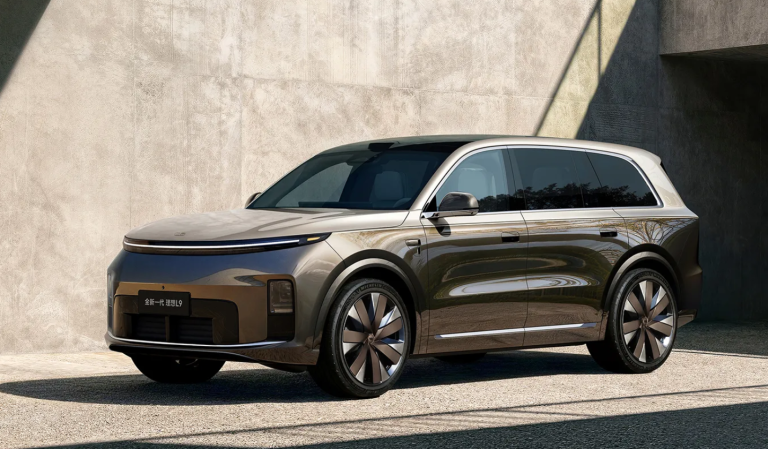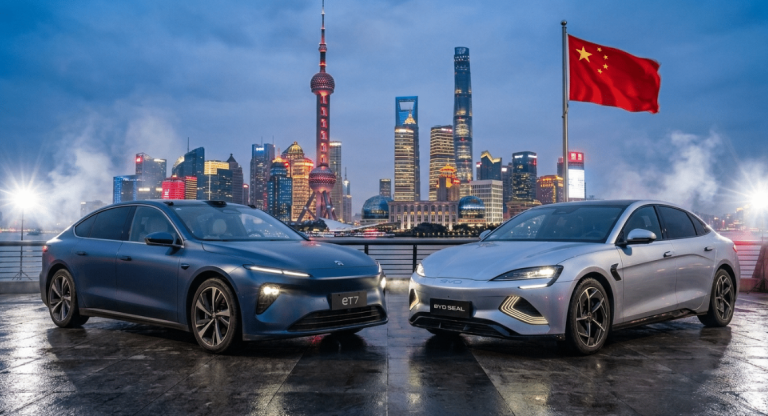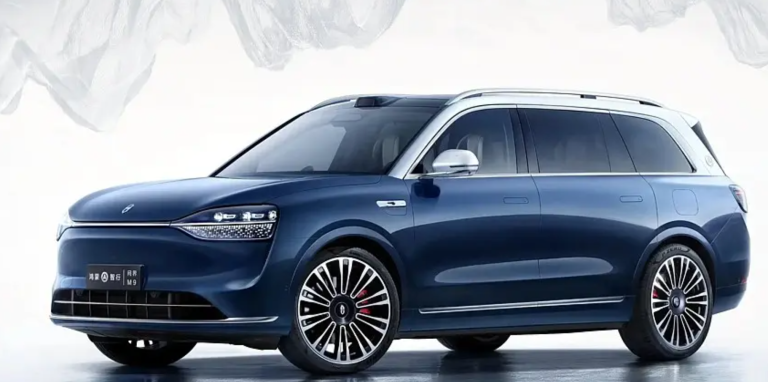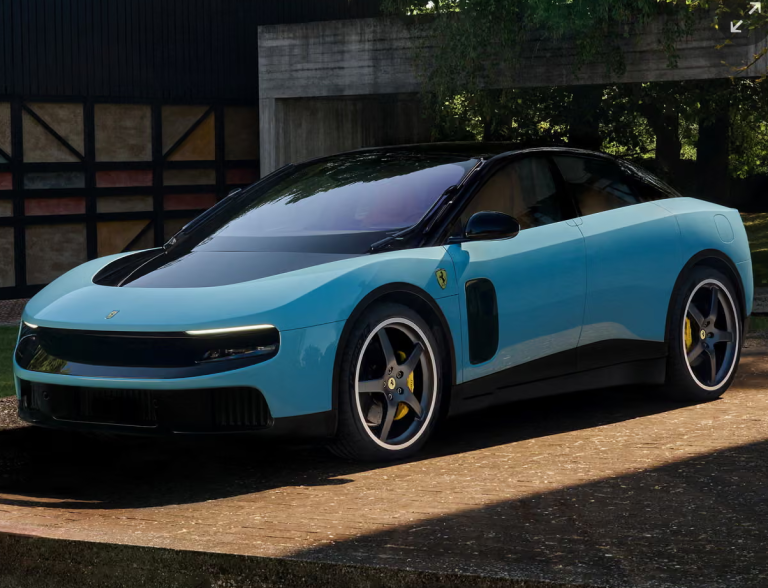
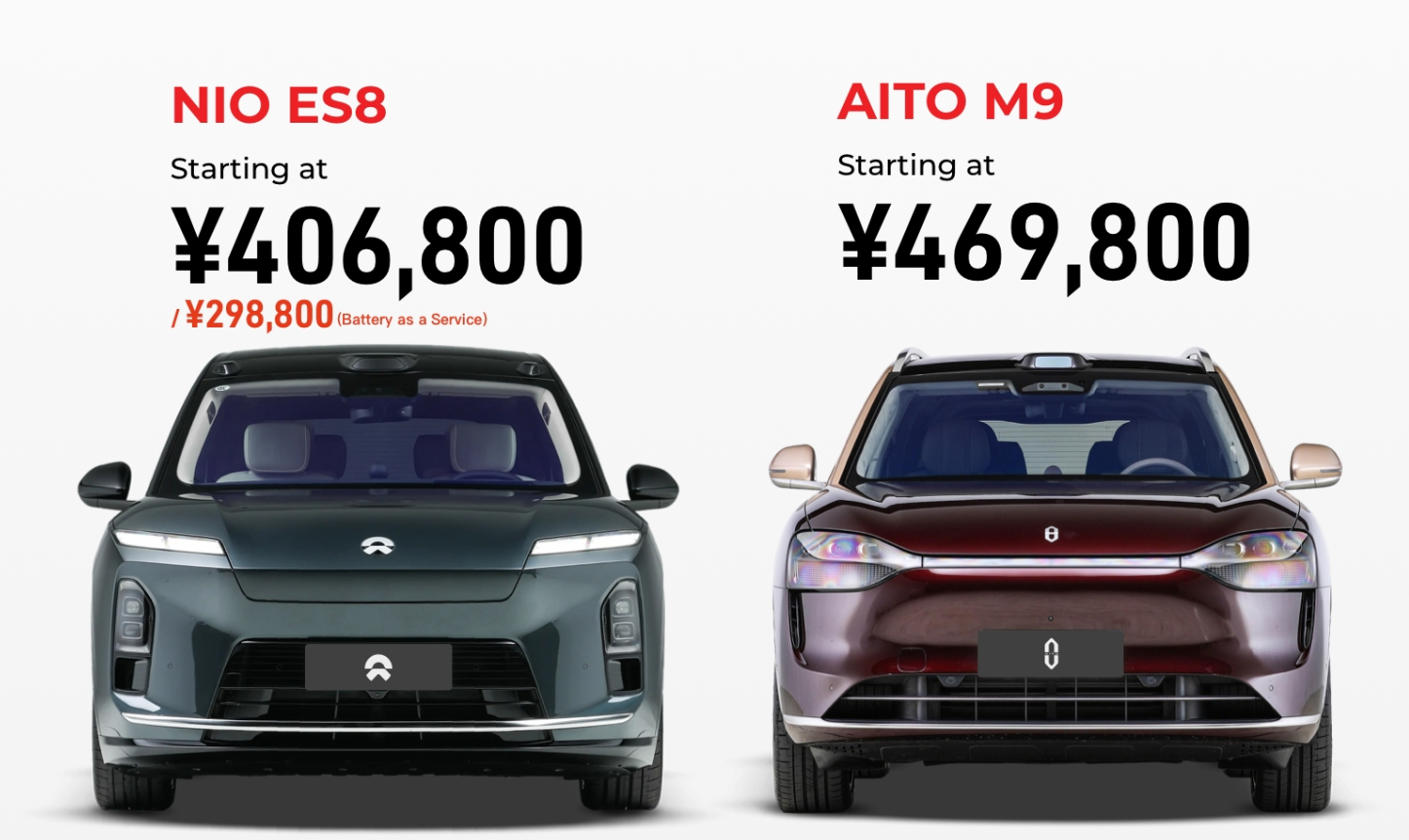
On May 27, 2026, China’s premium SUV segment witnessed a once-in-a-generation showdown: two flagship 9-series electric SUVs — the new AITO M9 (built by Huawei and Seres) and the NIO ES9 — launched on the very same day, each backed by an executive proclaiming their car was the best on Earth. The AITO M9 vs NIO ES9 battle is now the defining narrative of China’s premium EV market in 2026.
Richard Yu Chengdong, Chairman of Huawei’s Consumer BG, opened with: “The AITO M9 is the strongest on the planet, leading the industry by at least two years.” Hours later, NIO founder William Li countered: “NIO ES9’s 48V integrated active suspension is a generation ahead of any 400V/800V split-architecture product.” The two statements, captured live and replayed across Chinese social media, set the tone for the rest of the year.
AITO M9: RMB 479,800–659,800, Six LiDARs and ADS 5
The new AITO M9 is priced from RMB 479,800 to RMB 659,800 (≈US$66,179–$91,007). Huawei lists over 140 new or upgraded technologies and ships every trim with a standard six-LiDAR sensor matrix, including one 896-line main LiDAR — believed to be the industry’s first production deployment at that resolution.
Forty driver-assistance sensors feed the new Huawei Qiankun ADS 5 autonomous driving stack. Yu declined to enumerate the upgrades on stage, saying simply that the M9 has “too many firsts to list one by one” — a sales-deck flourish that Chinese commentators have already meme’d.
The chassis is equally ambitious:
- Front: double-wishbone independent suspension
- Rear: multi-link independent suspension
- Air springs: closed-loop dual-chamber air suspension
- Dampers: dual-valve continuous variable damping
- Rear-wheel steering: ±8 degrees
- Active suspension: 800V system with intelligent road-preview control
Drive modes include Slippery, Snow, Sand, Off-road Recovery, and Wading (which Huawei calls “controlled water transit”). The active system can independently target pitch, roll and vertical body motion across all four wheels in real time. Read more: NIO ES9: Flagship Luxury SUV with 900V Architecture to Launch on May 27.
NIO ES9: RMB 390,000 with BaaS, 900V and 48V Suspension
NIO’s pricing strategy turns on its Battery-as-a-Service (BaaS) rental model. With battery rental, the ES9 starts at RMB 390,000 (≈$53,793); buy the 102 kWh battery outright and pricing runs RMB 498,000–628,000 (≈$68,690–$86,621). That RMB 390,000 entry number is intentionally provocative — undercutting an entry-trim M9 by roughly RMB 90,000 (≈$12,400) once you BaaS the battery.
Every NIO ES9 ships with:
- 900V architecture and dual electric motors
- 102 kWh battery (BaaS-compatible)
- Steer-by-wire and rear-wheel steering up to ±8.4°
- NIO’s Shenji NX9031 in-house ADAS chip
- Front “Sky-Flying” zero-gravity executive seats
- Jiuxiao Tianqin immersive audio system
The headline-grabbing 48V integrated active suspension is reserved for the Executive Signature trim and above — RMB 558,000 (≈$76,966) cash or RMB 450,000 (≈$62,069) under BaaS.
Why William Li Says 48V Active Suspension Is a Generation Ahead
Li’s claim is technical, not theatrical. NIO’s “Tianxing” 48V integrated active suspension fuses the damper, electric drive unit and control logic into a single compact assembly — versus the split-architecture approach favoured by 400V and 800V suppliers, where the actuator, damper and high-voltage motor live in separate housings.
NIO’s stated advantages over split designs:
- Faster response — millisecond-class wheel-by-wheel torque adjustment
- Higher precision — closed-loop control of body pitch, roll and vertical motion
- Lower energy consumption — integrated layout reduces parasitic load
- Quieter operation — fewer mechanical interfaces means less NVH
- Greater functional range — actively lifts wheels over speed bumps and lowers the body up to 70 mm to clear underground parking height limits
Li predicts 48V will become the de-facto standard architecture for next-generation BEVs, citing the Tesla Cybertruck’s 48V low-voltage system as supporting evidence. Whether that thesis holds depends on cost curves over the next 24 months. Read more: Is the NIO ES9 Door Handle Safe? NIO Responds to New National Safety Standards.
How the Two Executives Are Selling the Same Day
The launch-day rhetoric reveals two different go-to-market philosophies:
Huawei + Seres (AITO M9): Sell the hardware spec sheet — six LiDARs, 896-line main unit, 800V active suspension, 140+ upgrades. Yu’s “two-year lead” claim leans on Huawei’s perceived ADAS supremacy and the sheer accumulation of features.
NIO ES9: Sell the architecture — 900V, 48V suspension, in-house chip, swappable battery, BaaS pricing. Li’s pitch is that NIO’s vertical integration produces a more cohesive engineering story than the M9’s checklist.
Both executives know that, in China’s premium 9-series SUV space, no rational consumer will read every spec. The brand narrative wins. Read more: New AITO M9 Officially Launches: Priced from RMB 479,800 with 140+ Upgrades and….
What This Means for Buyers and Competitors
For Chinese premium SUV buyers, the choice now sharpens to:
- Want Huawei’s smart cockpit and ADS 5? The AITO M9 is the most fully realized expression of the Huawei Inside (HI) playbook.
- Want NIO’s swap network and a flat monthly battery fee? The ES9 with BaaS keeps the entry sticker the lowest in the segment.
- Want ride quality first? NIO’s 48V active suspension is the only fully integrated implementation on sale today; the M9’s air + active system is technically more conservative but proven.
For Li Auto, BMW iX, Mercedes-Benz EQS SUV and Audi Q8 e-tron — all of which compete in the RMB 500,000–700,000 (≈$69,000–$96,500) bracket — the message is unambiguous: the centre of gravity in premium electric SUVs has moved decisively to domestic Chinese brands.
Frequently Asked Questions
When did the AITO M9 and NIO ES9 launch?
Both flagship SUVs launched in China on May 27, 2026, in back-to-back events that dominated automotive social media for the day.
How much does the new AITO M9 cost?
The new AITO M9 is priced from RMB 479,800 to RMB 659,800 (approximately US$66,179–$91,007) across its trim lineup.
How much does the NIO ES9 cost with BaaS?
With NIO’s Battery-as-a-Service rental, the ES9 starts at RMB 390,000 (≈US$53,793). Buy the 102 kWh battery outright and pricing runs RMB 498,000–628,000 (≈$68,690–$86,621).
What is 48V integrated active suspension?
It is NIO’s approach of merging the damper, electric actuator and control unit into one assembly running on a 48V supply, instead of splitting the actuator and high-voltage motor across separate housings. NIO claims faster response, lower energy use, quieter operation and the ability to lower the body up to 70 mm.
Reviewed by Han Liu, Editor, iEVChina.
Source: Autohome
About the Author