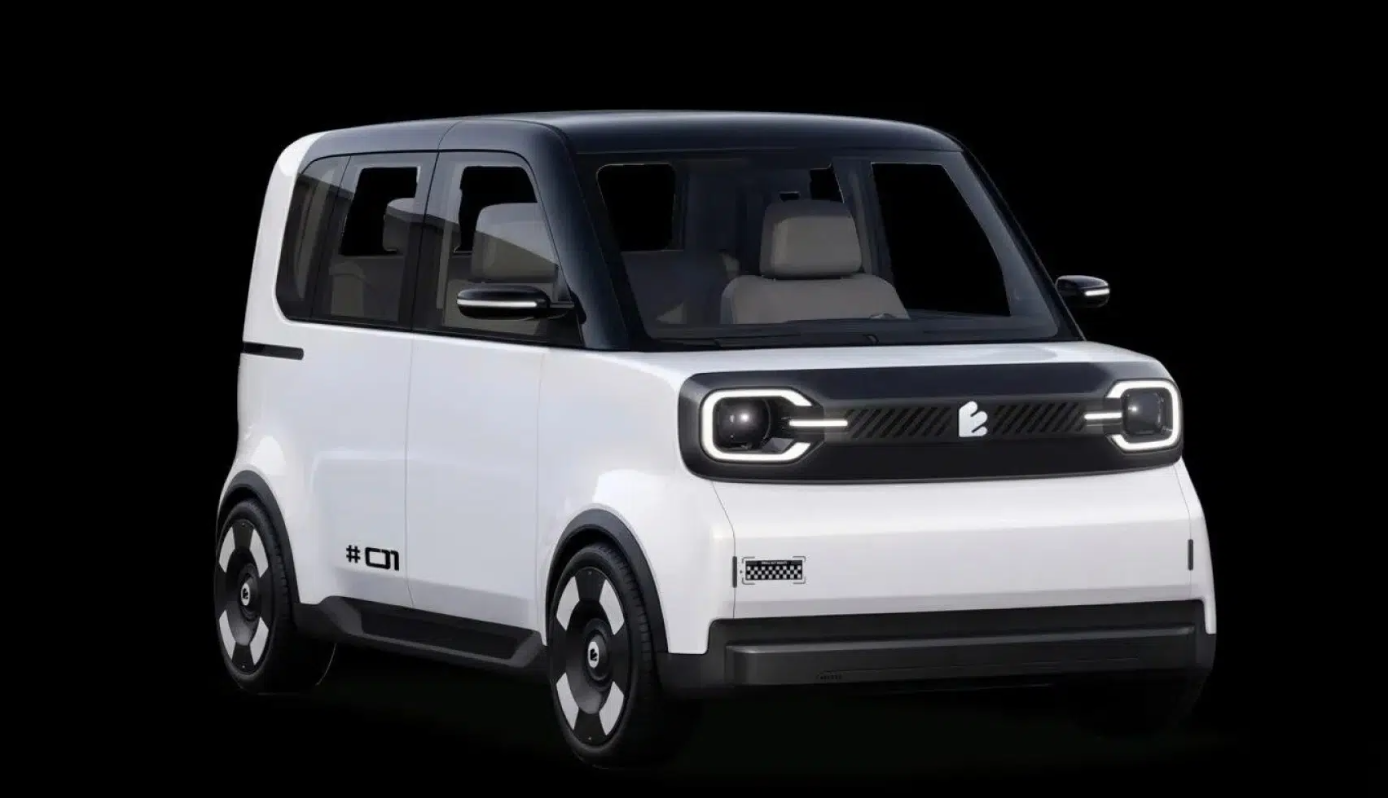
Chery Automobile, Japanese auto-parts retail giant Autobacs Seven, and three other partners have formalised a new battery-electric brand specifically for the Japanese market: EMTA. The first Chery EMTA Japan K-Car is scheduled to go on sale in spring 2027, with four models planned by the end of 2029. The deal represents one of the most structurally creative attempts by a Chinese OEM to enter Japan to date.
EMTA is operated by Japan-based EMT KK, whose parent company is a five-way joint venture called EMT (Electric Mobility Technologies), registered in Singapore in August 2025. The Singapore parent’s shareholding structure is unusually balanced and worth studying closely.
EMT’s Five-Way Shareholding
According to disclosed filings, EMT’s five shareholders hold the following stakes:
- Chery Automobile — 27.27% (tied for largest shareholder)
- Jiangsu Yueda Automotive Group — 27.27% (tied for largest shareholder)
- Autobacs Seven — 18.18%
- Gotion High-Tech — 18.18%
- Anest Iwata — 9.09%
Chery and Yueda are jointly the largest shareholders. Chery is explicit, however, that it is purely a financial and technology shareholder; it does not run EMT’s day-to-day operations. That clear separation is critical to the brand’s pitch as “a Japanese EV brand, defined in Japan.”
Who Builds What in the EMTA Stack
The division of labour across the five partners is highly specialised:
- Chery — vehicle platform, three-in-one electric drive system, intelligent driving core technologies
- Yueda — vehicle assembly at its Yancheng plant in Jiangsu (formerly home to Yueda Kia and now repurposed for EV contract manufacturing)
- Gotion High-Tech — battery cells and packs
- Autobacs Seven — distribution, sales, after-sales and localisation across its 1,200-strong Japanese retail network
- Anest Iwata — paint, coating processes and quality assurance support
The product concept and design decisions, however, are led by a Japan-based team that has reportedly recruited engineers from Honda and Mazda. EMTA’s CMO is Susumu Uchikoshi, the former Managing Director of Nissan China; the CEO is He Xiaoqing, former President of Changan Ford and currently a Vice President of Chery. Read more: Chinese EV Sales Europe 2026: BYD Chery Market Share Hits 15% Record.
Product Plan: Four K-Cars Through 2029
EMTA’s product roadmap is sharply focused on the Japanese Kei-car (K-Car) segment — vehicles capped at 660 cc engine displacement and a maximum body footprint of 3.4 m long × 1.48 m wide × 2.0 m tall. The product cadence:
- Spring 2027: first all-electric K-Car launches
- By end-2029: four K-Car models on sale, covering the mainstream Japanese small EV commuter spectrum
The initial production approach is “Made in China, sold in Japan”, with vehicles built in Yancheng and shipped to Japan. EMTA has also disclosed a longer-term ambition to localise production inside Japan after 2030, contingent on volume scale.
Retail: Riding the Autobacs Seven Network
Autobacs Seven operates roughly 1,200 retail locations across Japan, mostly auto-parts and accessory stores. EMTA plans to begin with about 100 sales-and-service touchpoints at the spring 2027 launch and expand to several hundred locations within the same fiscal year.
That retail-light, partner-heavy approach is the single biggest reason this deal matters. Most Chinese OEMs entering Japan in the past decade — including BYD — have had to build their own dealer network from scratch. EMTA gets a roughly 30-fold head start. Read more: Exeed Yaoguang 2027 Launches with Hybrid and ICE Options.
Why Chinese OEMs Are Targeting the Japanese K-Car Market
The Japanese K-Car segment ticks four boxes that Chinese OEMs find irresistible:
- Volume: Around 40% of new-car sales in Japan are K-Cars — over 1.5 million units per year
- Policy support: K-Cars enjoy lower taxes, lower mandatory insurance, and easier urban parking permits
- Low EV penetration: Battery-electric K-Cars remain a small share of the segment, dominated by ICE; the BEV runway is enormous
- Manufacturing fit: Chinese OEMs are world-class at low-cost EV production; the K-Car’s small footprint suits LFP battery packaging
BYD is reportedly preparing its own K-Car contender for similar reasons, setting up a Sino-Japanese head-to-head in a segment that, until 2024, was the most jealously guarded preserve of Suzuki, Daihatsu, Honda and Nissan.
The Bigger Picture: A New Template for Chinese OEMs Going Global
The EMTA model — Singapore-domiciled holding, Japanese brand identity, Chinese technology + capacity, Japanese distribution — is fundamentally different from the dominant Chinese export playbook. It is light on capital, deliberately blurs national-brand perception, and front-loads partnership with a local retail giant.
If EMTA’s K-Cars sell, expect Chinese OEMs to copy this template into other tough-to-crack markets, including South Korea, Italy and possibly the United States. Read more: China’s EV Charging Infrastructure Reaches 21.4 Million Units, Targeting 28….
Frequently Asked Questions
What is EMTA?
EMTA is a new Japan-only battery-electric vehicle brand, operated by Japan’s EMT KK and owned by a five-way joint venture registered in Singapore. Chery Automobile and Yueda Group are the tied largest shareholders.
When will the first Chery-backed EMTA K-Car launch?
The first EMTA K-Car is scheduled to go on sale in spring 2027, with four models planned for the Japanese market by the end of 2029.
Who are EMTA’s shareholders?
Chery Automobile (27.27%), Jiangsu Yueda Automotive Group (27.27%), Autobacs Seven (18.18%), Gotion High-Tech (18.18%) and Anest Iwata (9.09%).
Why is Chery targeting Japan’s K-Car market?
K-Cars account for roughly 40% of new-car sales in Japan, enjoy preferential tax and parking treatment, and have very low BEV penetration today — making them one of the largest untapped EV opportunities in any developed market.
Reviewed by Han Liu, Editor, iEVChina.
Source: Autohome
About the Author