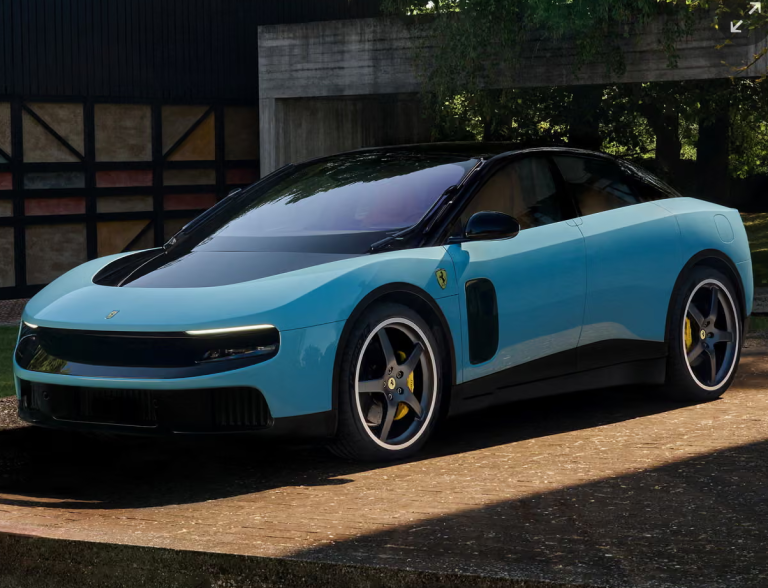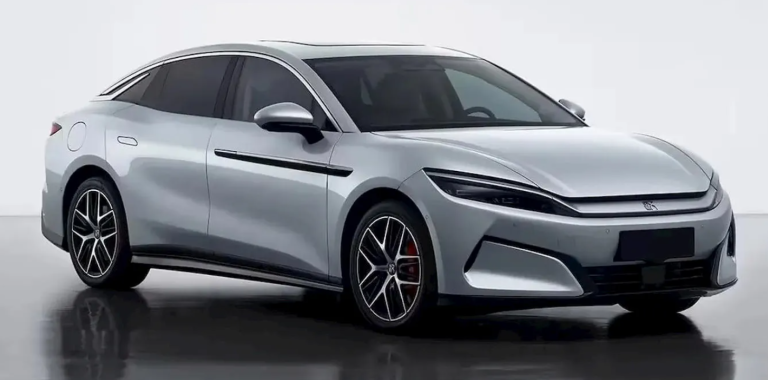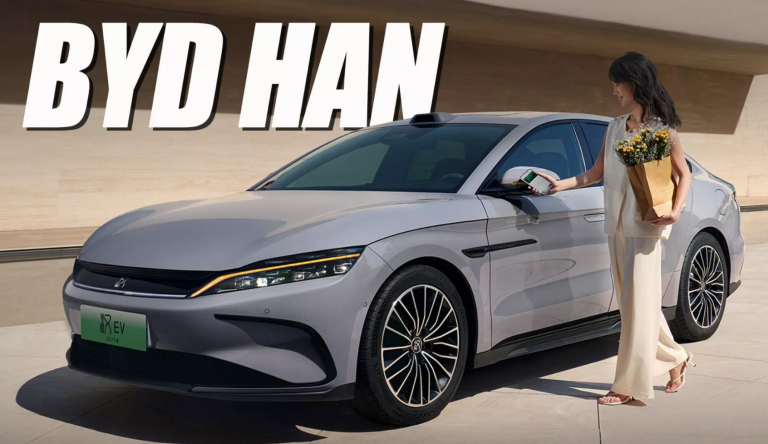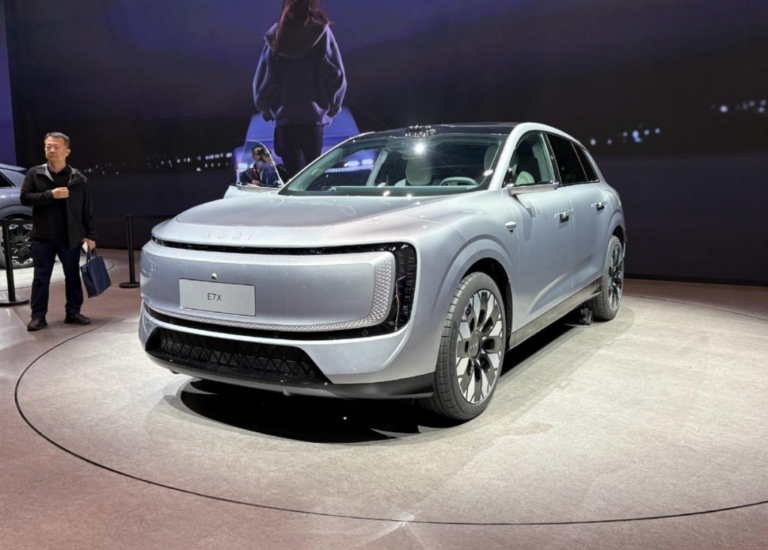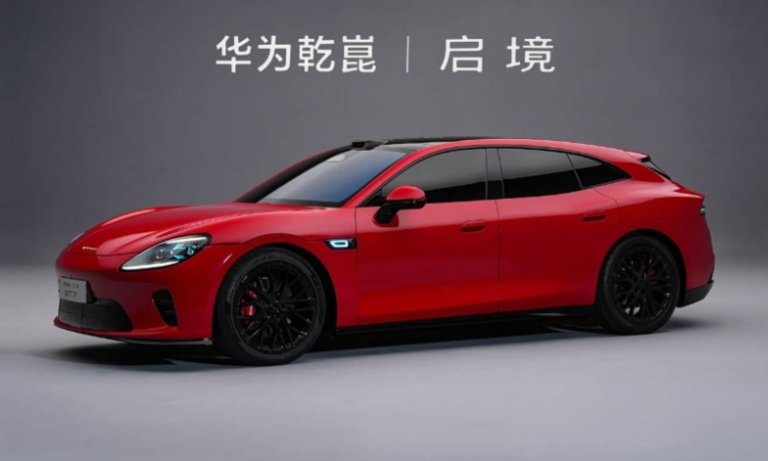
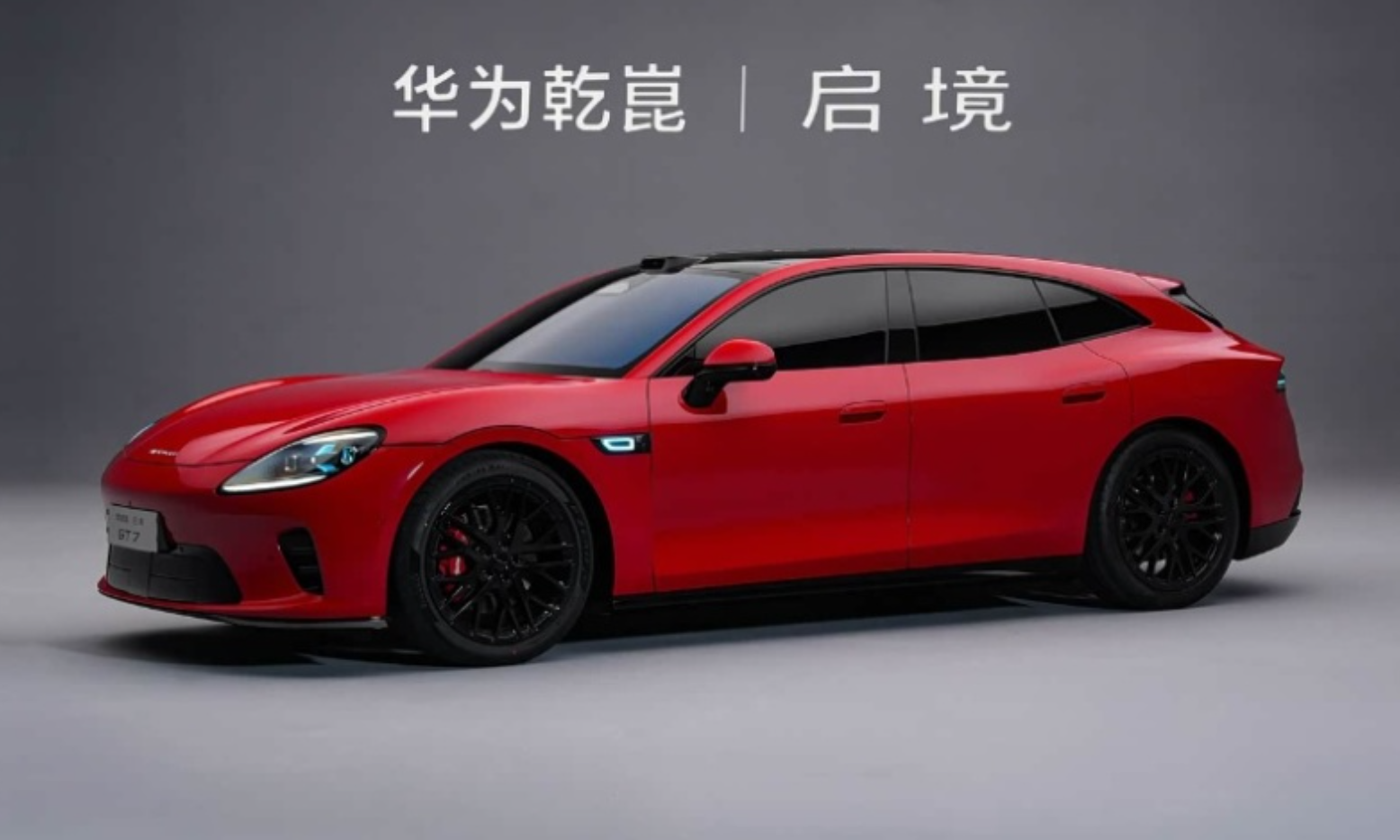
When GAC and Huawei jointly opened pre-orders for the Qiyuan GT7 on May 29, 2026, they did more than announce a new shooting brake. They officially put Qiyuan — the seventh distinct “Huawei-co-built” automotive brand — into the Chinese market, and quietly upgraded the template Huawei has been running with Seres, Chery, BAIC, JAC, Dongfeng, SAIC and now GAC.
This piece is a deep dive into what Qiyuan actually is, why GAC reached for a separate brand instead of running these models under Aion or Hyper, how Qiyuan’s alliance terms compare to AITO and Luxeed, and what to watch as the GT7 (and its incoming GX7 SUV sibling) reach customer hands.
The Five-Layer Huawei Auto Alliance Map
To understand where Qiyuan sits, you need to see the five distinct ways Huawei works with carmakers today:
- Pure parts supplier — Huawei sells discrete components (electric drive units, MDC compute platforms, lidars) to anyone who will buy. This is the relationship with most legacy Chinese OEMs.
- Huawei Inside (HI) — deeper integration of the full Qiankun ADS / HarmonyOS stack into a partner’s own vehicle (Avatr, Arcfox).
- Huawei Smart Selection (HSS / 鸿蒙智选) — Huawei co-defines the product, controls cockpit and ADS, and runs retail and marketing. Brand and chassis come from the OEM partner. AITO (Seres), Luxeed (Chery), Stelato (BAIC), Maextro (JAC), Shangjie (SAIC) all sit here.
- HarmonyOS Intelligent Mobility (HIMA / 鸿蒙智行) — the umbrella under which HSS brands are operated, with shared retail channels and joint marketing campaigns.
- Independent brand co-creation (the new layer Qiyuan represents) — a clean-sheet brand operated as a true joint venture, with Huawei branding and channels co-billed alongside the OEM partner, rather than carrying only the partner’s name. __SELF_LINK_1__
Qiyuan is the first brand explicitly built on this fifth model. The English alphanumeric mark “AISTALAND” on the GT7’s clamshell hood — from “AI Start New Land” — is the most visible signal of how that joint-creation positioning is being marketed.
Why GAC Created a New Brand Instead of Using Aion or Hyper
GAC already owns three NEV brands — Aion (mass-market BEV), Hyper (premium performance) and Trumpchi’s NEV variants. So why bother with Qiyuan?
Three reasons:
- Brand-distance from the GAC mothership. Aion has compressed its average transaction price to RMB 110,000–180,000. Hyper hasn’t fully escaped the price gravity of its parent. Anchoring a new RMB 220,000–310,000 product on a brand that is unambiguously “new” lets pricing escape downward anchoring.
- Channel architecture. Qiyuan’s dual-channel rollout — Huawei Qiankun Smart Driving Authorised Experience Centres in tier-1 malls, plus Qiyuan User Centres for delivery and service — would have been impossible inside GAC’s existing dealer network without major dealer revolt. A clean-sheet brand sidesteps that fight.
- Huawei’s leverage. Huawei’s revenue share inside an HSS-style relationship is materially higher than inside a pure HI parts-supply deal. Qiyuan’s structure lets Huawei lock in that economics on GAC’s upcoming top-end models without diluting AITO or Luxeed, which are not GAC-supplied. __SELF_LINK_2__
Qiyuan vs AITO vs Luxeed: A Practical Comparison
For Chinese consumers shopping the RMB 220,000–350,000 smart-EV bracket, the most common question is: how is Qiyuan actually different from the AITO and Luxeed they already know?
Cockpit and ADS
All three brands run the same generation of HarmonyOS cockpit and Huawei Qiankun ADS. Qiyuan GT7 is the first car to ship ADS 5, with the 896-line dual-light-path lidar. AITO M9 currently runs ADS 4.x; Luxeed S7 sits at ADS 3+. Expect cross-pollination within months, but Qiyuan gets the new toy first.
Vehicle architecture
AITO uses Seres’ chassis platforms, biased toward EREV. Luxeed uses Chery’s, primarily BEV. Qiyuan uses GAC’s newest 800 V BEV platform — a different, arguably more advanced base than either sibling brand.
Body styles and segments
AITO has built its franchise around large SUVs and MPVs (M5/M7/M9/M8). Luxeed is anchored by the S7 sedan and R7 SUV. Qiyuan’s launch lineup is more deliberately stylistic: the GT7 shooting brake first, GX7 large 5-seat SUV second. That positioning aims at younger, design-led buyers who feel that the larger AITO range looks too “family” for them.
Retail experience
AITO and Luxeed sell through Huawei’s consumer-electronics retail estate (Huawei Authorised Experience Stores). Qiyuan does too, but with a parallel network of Qiyuan-branded User Centres explicitly for handover and service — a model closer to NIO and XPeng than to the original HSS template. __SELF_LINK_3__
The Vehicle Roadmap: GT7, GX7, and What Comes After
Qiyuan has confirmed two products to date:
- Qiyuan GT7 — the launch hero. Pre-sale opened May 29, 2026 at RMB 219,900–309,900. Four trims. Official launch June 2026. Shooting brake body. 800 V platform. Up to 900 km CLTC range. Huawei ADS 5.
- Qiyuan GX7 — large 5-seat SUV, name confirmed May 29. Launch autumn 2026. Built on the same 800 V platform. Intended as the family-mobility companion.
Dealer chatter and supplier filings point to two more confirmed-but-unannounced models: a smaller B-segment sedan and a 6-seat MPV, both targeted for 2027. That cadence — two launches in 2026, two in 2027 — would put Qiyuan on the same launch tempo as AITO during its first 24 months.
The Strategic Bet for Both Parties
For GAC, Qiyuan is a chance to use Huawei’s smart-driving and brand-marketing firepower to do what Aion and Hyper have so far failed to do: build a credible RMB 250,000+ Chinese NEV brand that is not perceived as a discount competitor. Hyper has the price and the cars but lacks consumer awareness; Qiyuan starts from zero awareness but inherits Huawei’s brand strength on smart driving from day one.
For Huawei, Qiyuan is the laboratory for a model where Huawei’s logo is not subordinated to the OEM’s. AITO and Luxeed are partner brands, with Huawei sitting behind them. Qiyuan’s “AI Start New Land” positioning, dual-channel retail and co-branded experience centres push closer to a Huawei consumer-facing automotive brand — without Huawei ever having to break the regulatory promise that “Huawei does not build cars”.
What to Watch
- Final on-sale pricing in June. A few thousand yuan in either direction signals whether Qiyuan is positioning as a Xiaomi SU7 fighter or as a Luxeed alternative.
- L3 software rollout cadence. The Guangzhou L3 road-test licence is in hand; how quickly Qiyuan converts that to a customer-facing L3 feature on the GT7 will set the pace for the rest of the HIMA family.
- Retail expansion from 70 cities to nationwide. 300 stores by end of June is aggressive; tier-3 and tier-4 city coverage during H2 2026 will be the practical test.
- Whether other Huawei partners get the same brand-co-creation deal. If they do, expect a Dongfeng-Huawei and a SAIC-Huawei equivalent within 12 months.
Frequently Asked Questions
What is the Qiyuan brand?
Qiyuan (启境) is a new high-end smart-EV brand jointly built by GAC Group and Huawei Qiankun. It is the first Chinese automotive brand to be set up explicitly as a co-created joint brand between an OEM and Huawei, rather than as a Huawei-supported partner brand under the HIMA umbrella.
How is Qiyuan different from AITO or Luxeed?
AITO is a Seres-built brand under Huawei’s Smart Selection model; Luxeed is the Chery equivalent. Qiyuan goes further: it is a clean-sheet joint brand using GAC’s 800 V BEV platform, with a dual retail channel (Huawei Authorised Experience Centres plus Qiyuan User Centres) and a launch product (GT7) that ships the newest Huawei ADS 5 stack first.
Will Qiyuan replace GAC Aion or Hyper?
No. Aion remains the mass-market BEV brand and Hyper remains GAC’s performance NEV brand. Qiyuan is positioned above Aion and alongside (but distinct from) Hyper, in the RMB 220,000–350,000 smart-EV bracket where GAC has historically struggled to land a brand.
Is Huawei building cars now?
Huawei still does not build cars. In every HIMA brand, including Qiyuan, vehicle manufacturing is done by the partner OEM (here, GAC). Huawei contributes the cockpit, ADS, software, marketing and a share of retail. The Qiyuan model is the most consumer-facing Huawei automotive arrangement to date, but the regulatory promise that “Huawei does not build cars” remains intact.
What is the Qiyuan GT7’s pre-sale price?
The Qiyuan GT7 pre-sale opened May 29, 2026 in four trims spanning RMB 219,900 to 309,900, with the official on-sale launch scheduled for June 2026.
Reviewed by Han Liu, China auto industry analyst, ex-Autohome, for iEVChina.
Sources: Autohome, IT Home, official brand announcements.
About the Author