Li Auto L9
May 15, 2026: A Pivotal Day for Chinese EVs
May 15, 2026, emerged as one of the most significant dates in Chinese automotive history. Three major new-energy vehicle launches occurred simultaneously, each representing different strategic positions and technological approaches within the rapidly evolving Chinese EV market.
The day featured the debut of Li Auto’s L9 Livis flagship SUV, XPeng’s GX premium SUV, and NIO’s Onvo L80 family-oriented vehicle—all launching within hours of each other.
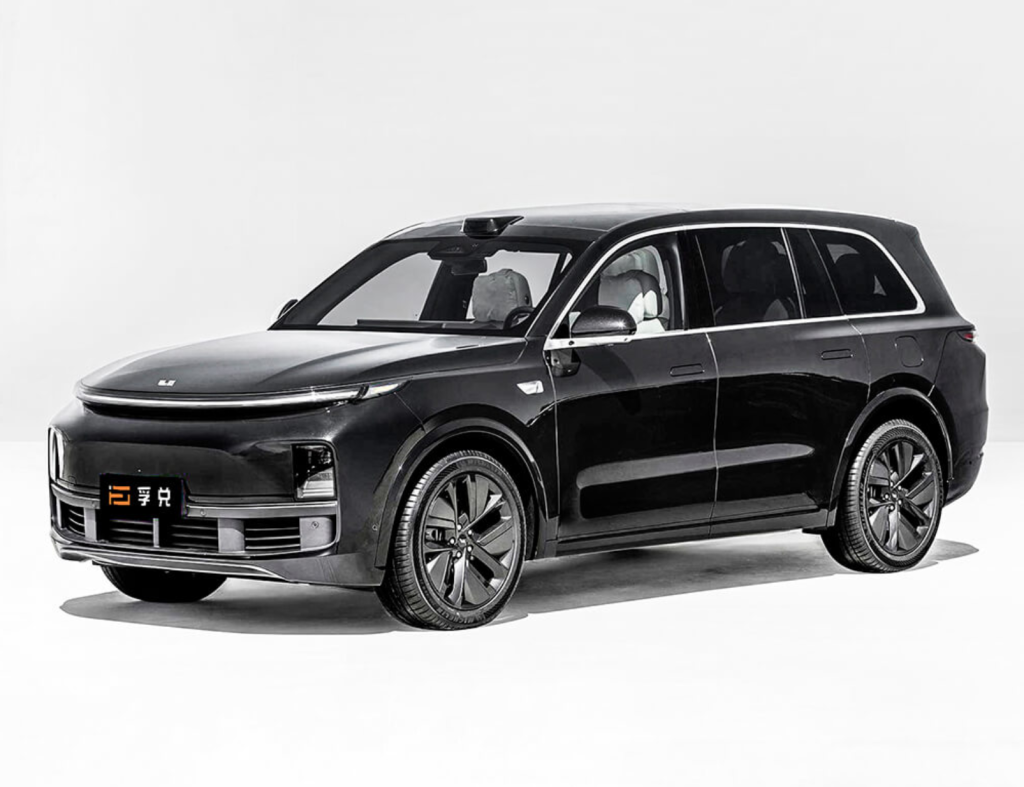
Li Auto L9 Livis: AI-First Luxury SUV
Introducing the Mach M100 Chip
The headline innovation of the L9 Livis is Li Auto’s self-developed Mach M100 chip, claimed to be the “world’s most powerful computing solution for production vehicles.”
Chip specifications:
- Process node: 5nm automotive-grade
- Architecture: Industry’s first dataflow-architecture edge inference chip
- Single-chip rating: 1,280 TOPS
- Dual-chip configuration: 2,560 TOPS total
- Latency improvement: 40% reduction in end-to-end processing
Advanced Chassis Technology
The L9 Livis features Li Auto’s 800V fully independent active suspension, specifically engineered for full-size SUVs:
- Four-wheel fully independent control architecture
- Steer-by-wire technology
- Four-wheel steering
- World’s first fully electric mechanical braking (EMB) system
- No auxiliary anti-roll bars required
This technology enables a full-size luxury SUV to achieve the agility typically associated with sports sedans.
Embodied AI in Mobility
Li Auto officially launched the L9 Livis on May 15 with deliveries beginning May 17, positioning it as the first production vehicle featuring “embodied AI”—a system where AI processing directly controls physical vehicle systems in real-time.
XPeng GX: High-End SUV with Battery Safety Chip
XPeng’s Premium Expansion
XPeng’s GX SUV represents the company’s strategic push into the high-end luxury segment. The vehicle was officially launched on May 20, with deliveries to follow.
Key GX features:
- New battery safety chip: Dedicated processor for battery health monitoring
- Extended range: Over 700km CLTC range
- Advanced driver assistance: Next-generation XPILOT system
XPeng’s AI Strategy
CEO He Xiaopeng outlined an aggressive AI roadmap at the 2026 Xuanyuan Automotive Blue Book Forum:
- L4 software capability: Targeted for 2028
- L5 autonomy prototype: Expected by 2030
- AI evolution speed: Six times faster than previous development rates
- 2026 AI R&D budget: 7 billion yuan for physical AI development
This represents a dramatic acceleration from earlier projections. As He explained: “Until last year, I doubted L5 would be achievable in my lifetime. The change stems from embracing the ‘data-as-fuel’ flywheel effect.”
NIO Onvo L80: Family-Focused Smart SUV
Onvo’s Market Positioning
NIO’s sub-brand Onvo launched the L80—a large five-seat SUV designed specifically for family use. The L80 emphasizes:
- Battery swapping capability: Full NIO Power Swap network compatibility
- Spacious interior: optimized for family comfort
- Competitive pricing: Positioned below NIO’s premium offerings
Three-Pronged Market Approach
The May 15 launches demonstrated how Chinese manufacturers are segmenting the market:
表格
| Brand | Vehicle | Segment | Key Technology |
|---|---|---|---|
| Li Auto | L9 Livis | Luxury 6-seat SUV | AI computing, EMB brakes |
| XPeng | GX | Premium 5-seat SUV | Battery safety, advanced ADAS |
| Onvo | L80 | Family 5-seat SUV | Battery swapping, value focus |
Q1 2026 Financial Context
Delivery Performance
The launch intensity comes amid challenging market conditions:
XPeng Q1 2026: 62,682 vehicles delivered (-33.32% YoY), within guidance of 61,000-66,000 units
Li Auto April 2026: 34,085 vehicles delivered; full Q1 results due May 28
NIO: Q1 financial results due May 21
Market Pressure
Chinese EV stocks experienced turbulence in May 2026:
- Li Auto shares dropped 14% following price cuts on the L9 series
- BYD retreated 2.8%
- XPeng slid 1.1%
The declines reflected investor concerns about overcapacity and margin pressure in China’s competitive EV market.
Battery Cost Squeeze: Hidden Challenge
Behind the launch excitement, manufacturers face rising costs:
- LFP battery prices: Increased from ~30,000 to 60,000 RMB per ton within one year
- Automotive-grade chips: Prices up significantly due to AI computing demand
- Component costs: Copper and aluminum prices rising
These cost pressures contributed to Li Auto’s L9 price reduction from presale 559,800 RMB to 509,800 RMB—a nearly 9% cut that alarmed investors.
FAQ
When did the Li Auto L9 Livis deliveries begin?
Li Auto officially launched the L9 Livis on May 15, 2026, with deliveries commencing on May 17, 2026.
What is Li Auto’s Mach M100 chip capability?
The Mach M100 features 2,560 TOPS of total computing power in dual-chip configuration, built on a 5nm automotive-grade process with 40% lower latency than previous generations.
What does XPeng’s L5 autonomy timeline mean?
XPeng CEO He Xiaopeng predicted L4 software capability by 2028 and L5 prototype by 2030, driven by AI development accelerating six-fold.
What distinguishes the NIO Onvo L80 from NIO main brand?
Onvo targets the mainstream family market with more affordable pricing, while maintaining access to NIO’s battery swapping infrastructure and technology platform.
Why did Li Auto reduce L9 pricing despite launching a new model?
Rising battery costs and intense market competition pressured Li Auto to reduce prices, signaling continued challenges in China’s EV price war despite record export growth.
About the Author