CATL battery technology
CATL’s Historic Technology Day: Two Breakthroughs Announced
Contemporary Amperex Technology (CATL), the world’s largest electric vehicle battery manufacturer, held what internal sources described as “the most technology-dense event in company history” in Beijing on April 21, 2026. The announcement revealed two transformative products that could reshape the EV industry’s future.
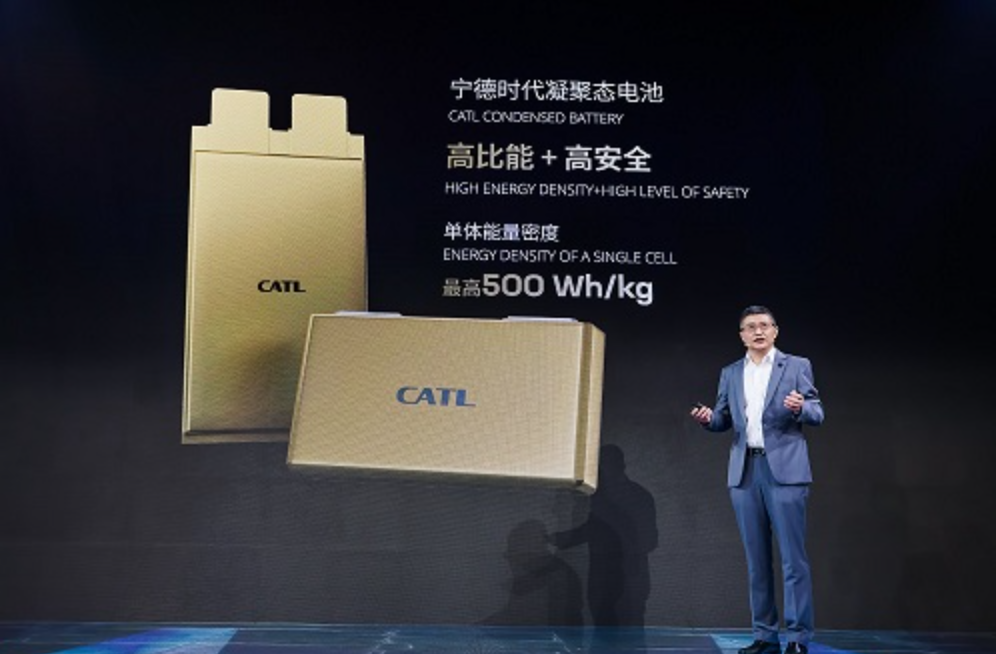
The company unveiled a condensed battery achieving 350 Wh/kg energy density—powering vehicles for up to 1,500 kilometers on a single charge—while simultaneously announcing commercial-scale sodium-ion battery production beginning in Q4 2026.
The Condensed Battery: 1,500km Range Reality
Technical Achievements
CATL’s condensed battery represents a fundamental leap in energy storage technology:
Energy Density: 350 Wh/kg
Maximum Range: 1,500 kilometers (approximately 930 miles)
Charging Capability: Adds 400km of range in just 5 minutes
Technology: Condensed electrolyte cells with high-nickel cathodes and silicon-carbon anodes
This breakthrough addresses what many considered the final barrier to mass EV adoption: range anxiety. At 1,500 kilometers, the average driver would need to charge only on longer journeys comparable to flying between major cities.
The Science Behind Condensed Technology
The condensed battery achieves its performance through revolutionary materials engineering:
Jelly-roll condensed electrolyte: A quasi-solid-state electrolyte that dramatically improves ion transport
High-nickel cathode: Maximizes energy density while maintaining thermal stability
Silicon-carbon composite anode: Enables higher capacity than traditional graphite anodes
Cell-to-pack integration: Eliminates intermediate modules for improved pack-level density
Safety Improvements
Beyond energy density, condensed batteries offer enhanced safety characteristics. The quasi-solid-state nature of the electrolyte significantly reduces flammability risks compared to conventional liquid electrolytes.
Sodium-Ion: The 2026 Q4 Mass Production Story
Why Sodium-Ion Matters
CATL’s announcement that sodium-ion batteries will enter mass production in Q4 2026 marks a pivotal moment for EV economics. Unlike lithium, sodium is:
Abundant: Global reserves are virtually unlimited compared to lithium
Cost-effective: Production costs potentially 20-30% lower than lithium-ion
Sourced domestically: Reduces dependency on imported lithium
Temperature resilient: Better performance in extreme cold conditions
Market Position
CATL positioning sodium-ion as complementary rather than competitive to lithium technology. The company targets different market segments:
Entry-level EVs: Where cost is paramount over range
Energy storage systems: Grid-scale applications where cycle life matters
Two and three-wheelers: Dominant in China’s urban mobility market
Strategic Implications
The sodium-ion breakthrough carries significant geopolitical implications. China currently dominates global lithium processing, but sodium’s domestic abundance could further strengthen Chinese manufacturers’ cost advantages.
CIBF 2026: Industry Validation
At the 25th China International Battery Fair (CIBF) in Shenzhen on May 13-15, 2026, CATL showcased its technological leadership alongside competitors like BYD and Weilan New Energy.
Certification Milestones
Key developments highlighted at CIBF 2026:
CATL and BYD announced their all-solid-state battery production lines passed UL 1642 and IEC 62619 Stage 2 certifications
First-batch deliveries scheduled within an 8-week cycle
Overseas energy storage inquiries requiring “Solid-State Cell Delivery Guarantee Letters” increased 210% year-over-year
Global Impact on EV Industry
CATL’s battery innovations have far-reaching implications:
Vehicle Design Revolution
Higher energy density batteries enable:
Smaller battery packs for equivalent range
Lighter vehicles with improved efficiency
Extended range without compromising interior space
Cost Trajectory
As condensed and sodium-ion technologies scale:
Battery pack prices expected to decline 15-20% by 2028
Entry-level EVs becoming cost-competitive with combustion vehicles
Premium vehicles gaining substantial range advantages
FAQ
How far can the CATL condensed battery go on a single charge?
The CATL condensed battery, achieving 350 Wh/kg energy density, can power vehicles for approximately 1,500 kilometers (930 miles) on a single charge.
When will CATL sodium-ion batteries enter mass production?
CATL has confirmed that sodium-ion battery mass production will begin in Q4 2026, targeting entry-level EVs and energy storage applications.
What makes CATL’s condensed battery different from solid-state batteries?
Condensed batteries use a quasi-solid-state electrolyte (jelly-roll condensed electrolyte) that offers improved safety and energy density, while remaining more manufacturable than full solid-state designs.
How much faster can the condensed battery charge?
CATL’s condensed battery supports 5-minute fast charging that adds 400 kilometers of range, comparable to conventional refueling times.
What percentage of global lithium-ion battery manufacturing is in China?
China accounts for approximately 85% of global lithium-ion battery manufacturing capacity, according to IEA analysis.
About the Author