China EV sales April 2026
The “Golden May” holiday kicked off with a flurry of data from China’s leading New Energy Vehicle (NEV) manufacturers. As the industry transitions from being “policy-driven” to “product-driven,” April 2026 saw record-breaking overseas expansions, a shift toward profitability, and a heated marketing war between tech-led brands and traditional manufacturing powerhouses.
1. The “Big Four” Startups: Mixed Results with a Profit Focus
While delivery numbers fluctuated, the dominant theme among China’s EV startups is now sustainable earnings over raw volume.
- Leapmotor (Leading the Growth): The standout performer of the month. Leapmotor delivered a staggering 71,387 vehicles, a 73.9% year-on-year increase. Chairman Zhu Jiangming expressed high confidence in hitting their 1-million-unit annual target for 2026.
- Li Auto (The Flagship Push): Delivered 34,085 units. All eyes are on the May 15th launch of the L9 Livis, which Li Xiang claims is “two generations ahead” of competitors like Volkswagen’s ID.ERA series.
- Nio (Brand Diversification): Delivered 29,356 units across its three brands (Nio, Onvo, and Firefly). Despite a slight month-on-month dip, Nio is doubling down on “systematic innovation” to achieve full-year profitability.
- XPENG Group (Software First): Delivered 31,011 units. In a strategic pivot, Chairman He Xiaopeng announced that XPENG will slow down hardware iterations in favor of AI and OTA (Over-the-Air) digital upgrades to boost margins.
2. BYD: Record Overseas Sales & Strategic Pricing Adjustments
BYD continues to dominate the global stage, reporting 321,000 units sold in April. While domestic year-on-year growth slowed, overseas sales hit a historic high of 130,000 units, cementing BYD’s status as a global EV titan.
The “Memory Chip” Inflation:
In a rare move, BYD announced a price hike for its “God’s Eye B” (DiPilot) ADAS system, increasing the price from ¥9,900 to ¥12,000. Analysts point to the global surge in storage hardware costs as the catalyst. This highlights a new industry reality: as cars become “computers on wheels,” their pricing is now tied directly to the global semiconductor supply chain.
3. The Tech Giants: Huawei & Xiaomi Maintain Momentum
The entry of smartphone giants into the automotive space has permanently altered market dynamics.
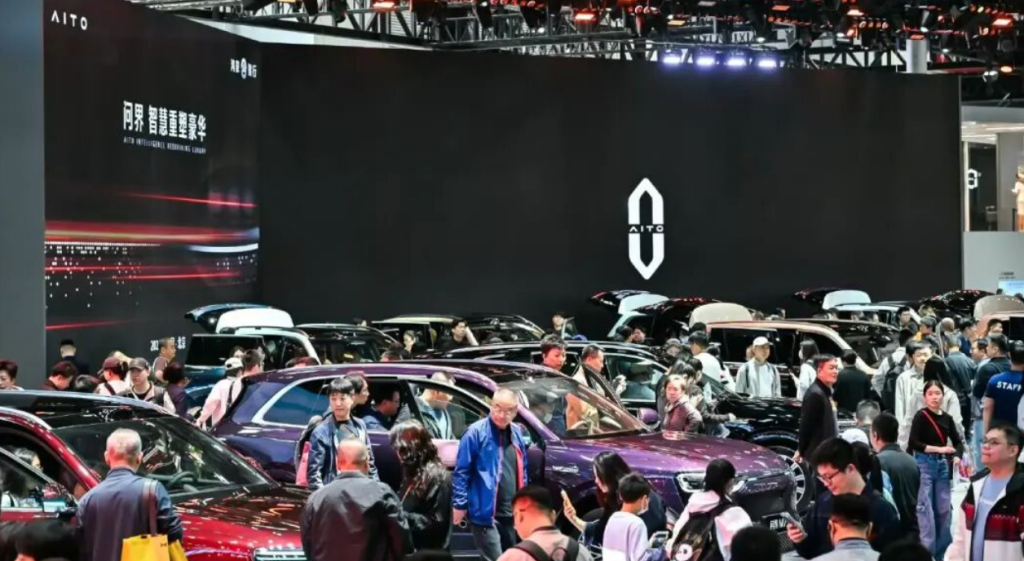
- HIMA (Huawei’s Harmony Intelligent Mobility Alliance): Reported 32,759 deliveries, up 18.9% YoY. The AITO brand (in partnership with Seres) remains the crown jewel, accounting for 70% of total sales.
- Xiaomi EV: Continuing its “dark horse” run, Xiaomi delivered over 30,000 units of the SU7 series in April alone, proving that tech-brand loyalty translates effectively to the automotive sector.
4. Market Summary: The “Beijing Auto Show Effect”
Industry experts suggest that while April saw some “waiting” from consumers, the 2026 Beijing Auto Show has created a massive reservoir of intent.
| Key Metric | Performance Trend |
| Market Driver | Transitioning from Subsidies to Product Innovation |
| Supply Chain Stress | Rising semiconductor/storage costs affecting ADAS pricing |
| Q2 Outlook | Stable recovery expected as Beijing Auto Show orders convert in May/June |
Consultant’s Analysis: What to Watch in May
The fierce “marketing war” (such as the public spat between Li Auto and SAIC-VW) indicates that the “involution” (extreme competition) is reaching a boiling point. For buyers, this means aggressive May promotions and higher tech specs. For investors, the focus should remain on software-driven revenue (XPENG) and global export capability (BYD).

About the Author