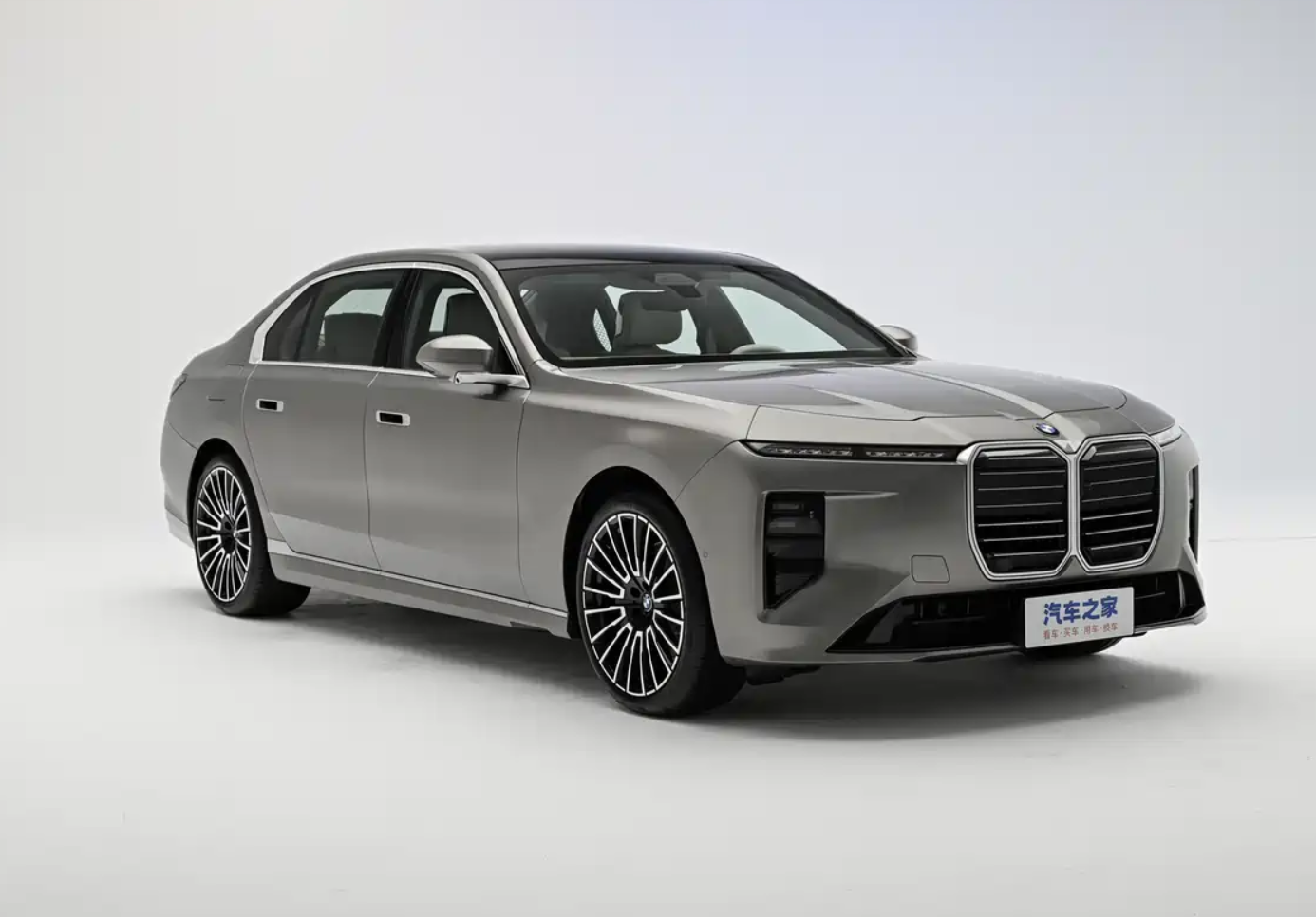
BMW i7
BMW has officially opened the configurator and pre-order process for the updated BMW 7 Series and BMW i7 in the German market. The mid-cycle refresh brings comprehensive upgrades to both the combustion-engined 7 Series and the fully electric i7, spanning exterior styling, interior technology, and powertrain refinements. While the initial ordering phase supports a limited set of variants — the 740 xDrive, i7 50 xDrive, and i7 60 xDrive — more trims and power levels will follow as BMW ramps up production at its Dingolfing plant.
Why the Updated BMW 7 Series and i7 Matter
The BMW 7 Series is the brand’s flagship sedan and a bellwether for how traditional luxury automakers are navigating the electric transition. The i7, in particular, is BMW’s most expensive EV and sits at the top of the electric luxury sedan hierarchy alongside the Mercedes EQS and the Porsche Taycan. This mid-cycle update is not just cosmetic — it reflects BMW’s response to the rapid pace of Chinese EV luxury competitors like the Yangwang U7, Hongqi H9 EV, and NIO ET9, which have raised the bar for cabin technology and smart features. The updated i7 needs to prove that a German luxury icon can still command a premium in a market where Chinese challengers offer more screen real estate, faster software updates, and aggressive pricing.
Updated BMW 7 Series / i7: What’s New
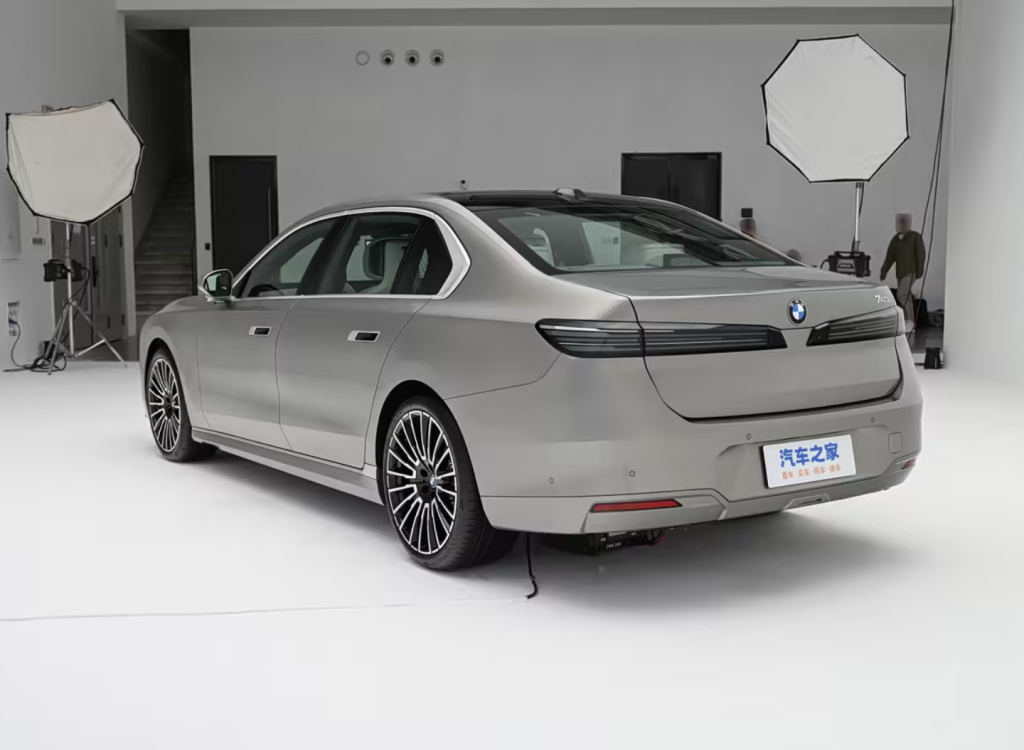
- Exterior: Revised front grille with illuminated surround, updated headlight signature, and new rear light graphic
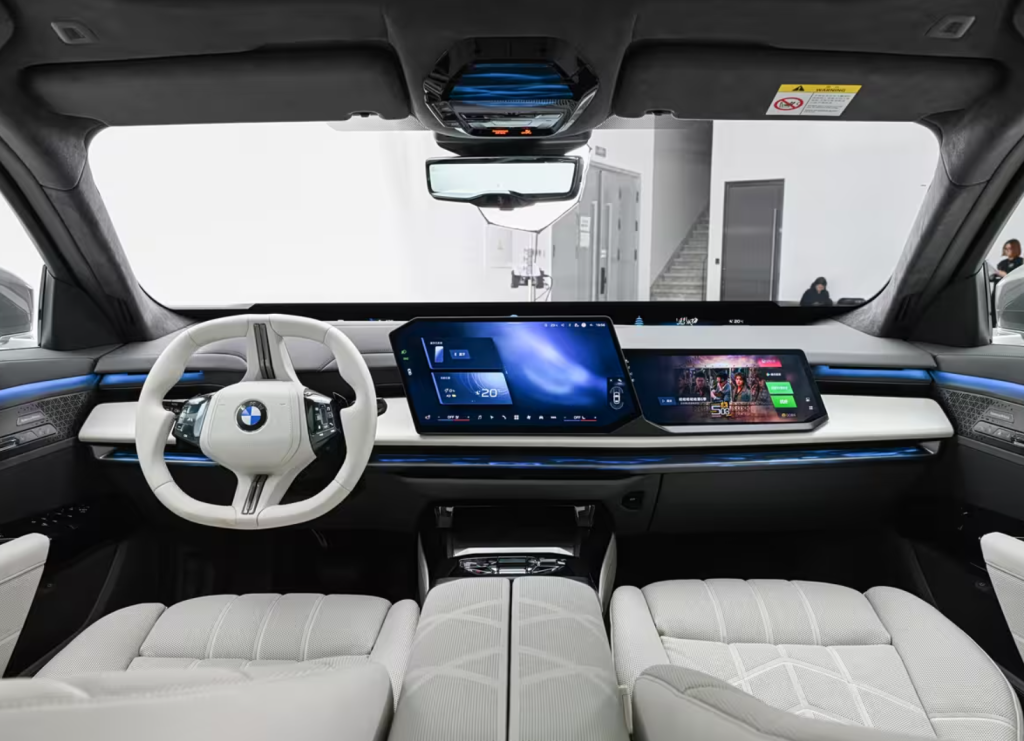
- Interior: Upgraded BMW Theatre Screen with higher resolution, improved iDrive software, and expanded voice-control functions
- Powertrain (i7 50 xDrive): Dual-motor AWD, approximately 340 kW (455 hp), CLTC range expected above 650 km
- Powertrain (i7 60 xDrive): Higher-output dual-motor AWD, approximately 400 kW (536 hp), with improved energy recovery calibration
- Powertrain (740 xDrive): Updated B58 3.0L inline-six turbo with mild-hybrid assistance
- Chassis: Refined air suspension tuning for improved ride comfort and NVH
Market Context
The full-size luxury sedan segment is under intense pressure globally, but especially in China — BMW’s single largest market for the 7 Series. Chinese buyers in the RMB 800,000–1,500,000 bracket now cross-shop the BMW i7 against the Mercedes EQS, Porsche Taycan, and a wave of domestic entrants offering comparable luxury at significantly lower prices. The Hongqi H9+ EV and NIO ET9, for example, deliver flagship-level interiors and advanced ADAS at roughly half the i7’s price point in China. BMW’s strategy with this update is to reinforce the 7 Series/i7’s brand prestige and driving-dynamics advantage while gradually expanding the electric range and charging speed to narrow the technology gap.
Competitive Landscape
In Europe, the updated BMW i7 competes primarily with the Mercedes-Benz EQS and the Porsche Taycan. The EQS leads on aerodynamic efficiency and interior space; the Taycan wins on driving dynamics and brand allure. The i7 positions itself between them — more traditional luxury than the EQS, more cabin presence than the Taycan. In China, however, the competitive set expands dramatically to include the Yangwang U7, NIO ET9, Hongqi H9+ EV, and even the Xiaomi SU7 Ultra at the lower end of the price spectrum. The updated BMW 7 Series and i7 will need strong brand pull and competitive financing to hold share in a market where domestic alternatives are improving faster than many expected.
What’s Next
The initial German pre-order phase covers a limited variant set, but BMW has confirmed that additional powertrain options — including a potential i7 70 xDrive and a revised M760e plug-in hybrid — will join the lineup later in 2026. Chinese market launch timing has not been officially confirmed, but historically the domestic BMW 7 Series follows the European debut by two to three months. Expect the updated BMW i7 to land in Chinese showrooms by Q3 or Q4 2026, potentially with market-specific features such as expanded rear-seat entertainment and locally adapted ADAS maps.
Frequently Asked Questions About the Updated BMW 7 Series and i7
When will the updated BMW i7 go on sale?
Pre-orders are now open in Germany for select variants (i7 50 xDrive and i7 60 xDrive). Full market launch in Europe is expected in Q3 2026, with China following shortly after.
What is the range of the updated BMW i7?
Official range figures for the updated i7 have not yet been published, but the current i7 50 xDrive achieves approximately 625 km (CLTC). The updated model is expected to exceed 650 km CLTC thanks to improved battery chemistry and energy management.
How does the BMW i7 compare to the Mercedes EQS?
The BMW i7 offers a more traditional luxury aesthetic and superior rear-seat comfort, while the Mercedes EQS leads on interior technology, aerodynamic efficiency, and available cabin space. The i7 also retains BMW’s driving-dynamics edge.
Will the updated BMW 7 Series be available in China?
Yes. The BMW 7 Series is one of BMW’s best-selling models in China. The updated version will launch in the Chinese market, likely in Q3–Q4 2026, with long-wheelbase configuration standard.
Is the BMW i7 fully electric?
Yes. The BMW i7 is the fully electric variant of the BMW 7 Series. The combustion-engined and plug-in hybrid variants are sold under the BMW 7 Series nameplate without the “i” prefix.
Source: Autohome.com
Editor’s note from Han Liu: The updated BMW i7 is a competent refresh, but the real test is whether it can hold ground in China against domestic luxury EVs that are evolving on a monthly cadence. BMW’s brand still opens doors, but “heritage luxury” alone won’t sustain a RMB 1 million+ price tag when a NIO ET9 delivers comparable cabin tech at half the price. The i7’s strongest card may actually be its driving dynamics — something Chinese EV brands still struggle to match at the flagship level.
Reviewed by Han Liu, Editor, iEVChina.
About the Author