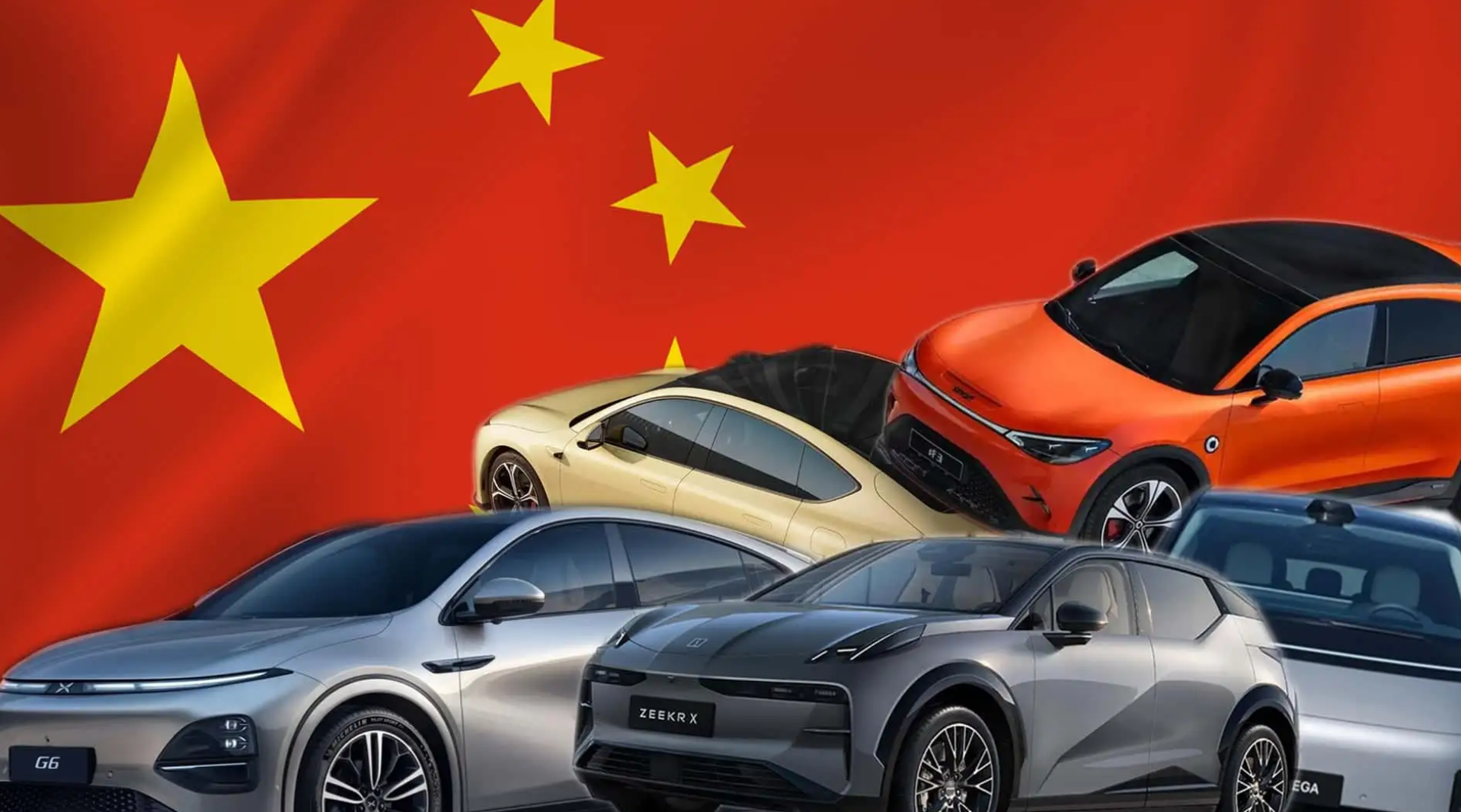
China’s electric-vehicle exports continue to surge in 2026, but the landscape is shifting fast. While European tariffs have reshaped the competitive equation, Chinese automakers are accelerating expansion into Southeast Asia, the Middle East, Latin America, and Africa — markets where trade barriers are lower and charging-infrastructure gaps make Chinese EREV and affordable BEV models especially attractive. Here is a comprehensive look at China’s EV export strategy in 2026, the numbers, the headwinds, and the opportunities.
Why China’s EV Export Strategy Matters in 2026
China is no longer just the world’s largest EV consumer — it is rapidly becoming its largest exporter. In 2025, China exported over 1.2 million new-energy vehicles, and 2026 is on track to exceed that figure. The export boom matters because it determines whether Chinese automakers can sustain the massive R&D and capacity investments they have made, even as domestic growth decelerates toward single digits. It also matters globally: the price and quality of Chinese EVs entering new markets are reshaping consumer expectations, competitive dynamics, and trade policy in every region they reach.
China EV Export Numbers: 2024–2026 Trajectory
- 2024: ~1.0 million NEV exports
- 2025: ~1.2 million NEV exports (+20% YoY)
- 2026 (projected): ~1.4–1.5 million NEV exports (+15–25% YoY)
- Top exporters by volume: BYD, SAIC (MG), Chery, Geely, GWM
- Fastest-growing export markets: Thailand, Saudi Arabia, UAE, Brazil, Mexico, Indonesia
Europe: Tariff Walls and Local-Production Pivot
The European Union’s decision to impose tariffs on Chinese-made EVs — ranging from 17% to 35% on top of the standard 10% import duty — has fundamentally changed the European market equation for Chinese brands. Rather than retreating, the largest Chinese exporters are pivoting to local production. BYD is building a plant in Hungary; SAIC is evaluating European manufacturing; and Chery has partnered with a Spanish facility. The tariff impact has been partially absorbed by Chinese brands cutting margins and offering aggressive financing, but the longer-term play is clear: Chinese automakers intend to manufacture in Europe, for Europe — just as Japanese and Korean automakers did decades earlier. In the interim, exports to Europe have slowed but not collapsed, with the strongest demand remaining for models that have no direct European competitor at the same price point.
Southeast Asia: The New Frontline
Southeast Asia is the single most important growth region for Chinese EV exports in 2026. Thailand, Indonesia, and Vietnam are the anchor markets, with combined annual new-vehicle sales exceeding 3 million units and EV penetration still below 10% in most countries. Chinese brands — led by BYD, SAIC MG, and GWM — have invested heavily in local assembly, dealer networks, and government relationships. BYD’s Thailand factory is operational; SAIC has assembly in Thailand and Indonesia; Chery is building in Malaysia. The EREV powertrain, still rare among Japanese competitors, gives Chinese brands a unique advantage in a region where public charging infrastructure is nascent but gasoline costs are high.
Middle East: Luxury Positioning and Government Fleet Deals
The Middle East — particularly the UAE, Saudi Arabia, and Qatar — has emerged as a premium market for Chinese EVs. Affluent consumers in the Gulf states are receptive to new brands, and government fleets (taxis, ride-hailing, airport shuttles) are actively transitioning to electric. Chinese brands are winning large government-procurement contracts by offering competitive pricing, fast delivery timelines, and willingness to customize vehicles for extreme-heat operation. NIO, Xpeng, and Zeekr are positioning themselves as premium-lifestyle brands alongside traditional European marques, while BYD and SAIC MG capture volume through fleet sales.
Latin America: Mexico as the Gateway
Mexico is the strategic gateway for Chinese EV exports to both the domestic Mexican market and — via USMCA-compliant manufacturing — potentially the United States. BYD, Chery, and MG are all evaluating or constructing manufacturing facilities in Mexico, attracted by tariff-free access to the US market under the USMCA trade agreement (subject to rules-of-origin requirements). Brazil, the largest auto market in Latin America, is also a major Chinese EV export destination, with BYD and GWM leading the charge. Chinese EVs are gaining share rapidly in Brazil’s ride-hailing fleet, where lower operating costs create a compelling value proposition.
Africa and Central Asia: The Emerging Frontier
Beyond the major regions, Chinese EVs are making inroads into Africa (particularly South Africa, Morocco, and Egypt) and Central Asia (Kazakhstan, Uzbekistan). These markets are small in absolute volume but symbolically important: they demonstrate that Chinese EVs can compete in environments with minimal charging infrastructure, extreme climates, and price-sensitive consumers. EREV models and affordable BEVs with LFP batteries are the primary export products, leveraging the cost and durability advantages of Chinese battery technology.
Headwinds and Risks
Despite the growth trajectory, China’s EV export boom faces significant risks. Trade barriers are rising not just in Europe but potentially in the United States and other markets. Local-content requirements in Southeast Asia and Latin America are pushing Chinese brands toward capital-intensive local production, eroding the cost advantage of exporting from China. Currency volatility, shipping-cost fluctuations, and geopolitical tensions all add uncertainty. And as Chinese brands establish local manufacturing, they lose the “home-market cost advantage” that has underpinned their export pricing — raising the question of whether they can sustain competitiveness when building vehicles abroad at higher labor and logistics costs.
Frequently Asked Questions About China EV Exports
How many EVs does China export?
China exported approximately 1.2 million new-energy vehicles in 2025 and is projected to export 1.4–1.5 million in 2026, making it the world’s largest EV exporter by a wide margin.
Which Chinese EV brands export the most?
BYD, SAIC (MG brand), Chery, Geely, and Great Wall Motors (GWM) are the top Chinese EV exporters by volume. BYD and SAIC MG lead in Europe and Southeast Asia; Chery is strong in the Middle East and Latin America.
Are Chinese EVs subject to tariffs in Europe?
Yes. The EU has imposed additional tariffs of 17–35% on Chinese-made EVs, on top of the standard 10% import duty. Total effective tariffs range from approximately 27% to 45%, depending on the manufacturer and level of state subsidization.
Where are Chinese automakers building factories outside China?
BYD is building a plant in Hungary (Europe) and operates a factory in Thailand. SAIC has assembly operations in Thailand and Indonesia. Chery is constructing facilities in Spain and Malaysia. Multiple brands are evaluating manufacturing in Mexico and Brazil.
Why are Chinese EVs competitive in export markets?
Chinese EVs offer a combination of competitive pricing, advanced smart-cockpit and ADAS features, fast product-refresh cadences, and — for EREV models — powertrain flexibility that is unmatched by Japanese, Korean, or European competitors at similar price points. LFP battery technology also provides cost and safety advantages in markets where charging infrastructure is limited.
Editor’s note from Han Liu: The China EV export story in 2026 is no longer about cheap cars flooding unprepared markets. It is about a maturing industry that is learning to navigate trade barriers, invest in local production, and tailor products for diverse global consumers. The parallels to the Japanese auto expansion of the 1970s and the Korean expansion of the 1990s are striking — but the speed is unprecedented. The world has never seen an automotive export boom at this scale, moving this fast.
Reviewed by Han Liu, Editor, iEVChina.
About the Author