EV AEB snow test 2026
By late 2025, the market penetration of New Energy Vehicles (NEVs) reached a staggering 59.5%. However, “range anxiety” and “cold-weather reliability” remain the top concerns for potential buyers. The latest 2025 Winter Test Insight Report puts the industry’s newest models to the test in extreme conditions (-10°C to -25°C). Are modern EVs truly ready for the deep freeze? Let’s dive into the data.
1. Reliability: 90% Success Rate in Extreme Cold
The days of frozen door handles and glitchy screens are fading. This year’s testing showed a significant leap in hardware maturity.
- The Result: 90% of tested vehicles passed the month-long high-intensity cold exposure without major issues.
- Minor Failures: Only 5 vehicles experienced faults, primarily involving 12V battery drain, cabin heating failures, or temporary air suspension malfunctions.
2. Range Performance: EREVs Lead, EVs Hold Steady
In the frigid Northeast regions, Plug-in Hybrids (PHEVs) and Extended Range EVs (EREVs) account for over 60% of sales—and for good reason.
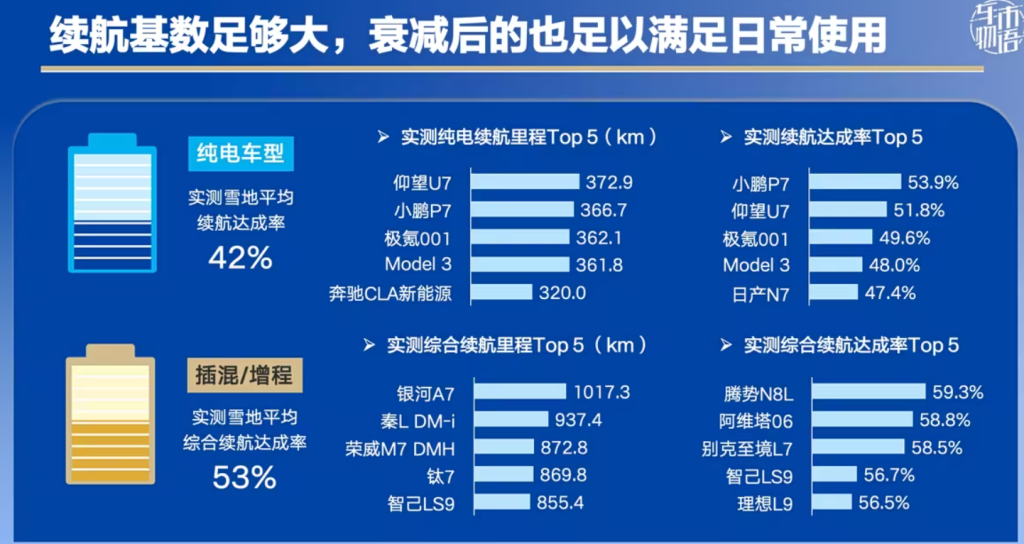
- Pure EVs: Achieved an average range fulfillment rate of 42%. With an average battery capacity of 79kWh, the real-world winter range averaged 257km.
- PHEVs/EREVs: Achieved a higher fulfillment rate of 53%, offering more peace of mind for long-distance winter travel.
- Top Performers: The Yangwang U7 recorded the longest winter range (372.9km), while the XPENG P7 achieved the highest efficiency rate at 54%.
3. The Great Battery Debate: LFP vs. NCM in the Cold
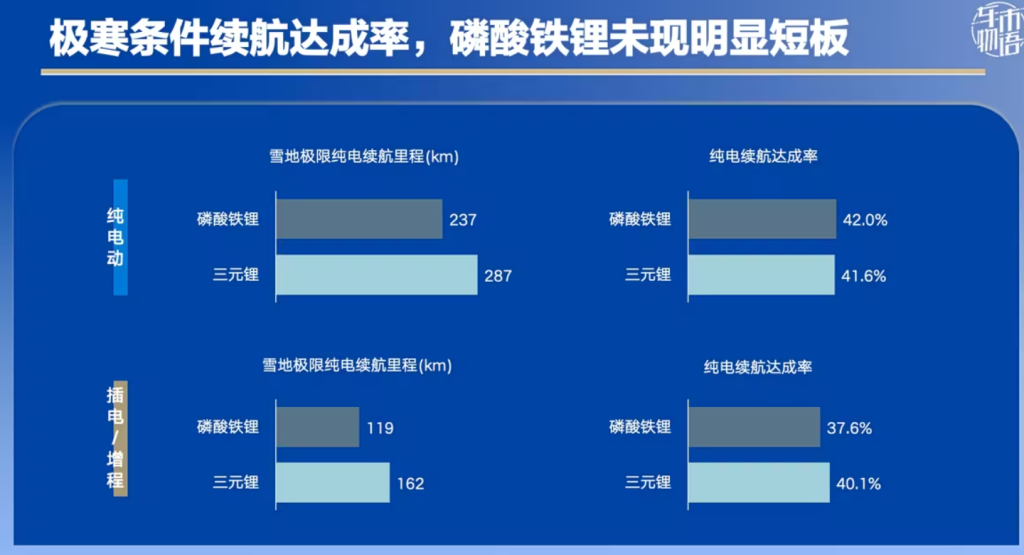
Traditionally, Lithium Iron Phosphate (LFP) batteries were considered “allergic” to cold. The 2025 data suggests this gap is closing:
- Pure EVs (LFP): 42.0% range fulfillment.
- Pure EVs (NCM/Ternary): 41.6% range fulfillment.
- The Verdict: LFP batteries have made massive strides in thermal management, showing no significant disadvantage against NCM in sub-zero temperatures.
4. “Reverse Joint Ventures” Outperform Traditional Luxury
A new trend has emerged: global brands collaborating with Chinese supply chains to boost competitiveness.
- The Winners: Mainstream global brands (like the Nissan N7 and Toyota Bozhi 3X) achieved an average 43.7% range fulfillment—surpassing many domestic rivals.
- The Surprise: High-end luxury brands struggled with expectations. Despite having the highest nominal range (866km CLTC), the Mercedes-Benz CLA NEV only achieved 320km in reality (37% rate), the largest discrepancy in the test.
5. Safety Warning: AEB Struggles on Snowy Roads
While 98% of tested cars feature Autonomous Emergency Braking (AEB), snowy conditions proved nearly fatal for these systems.
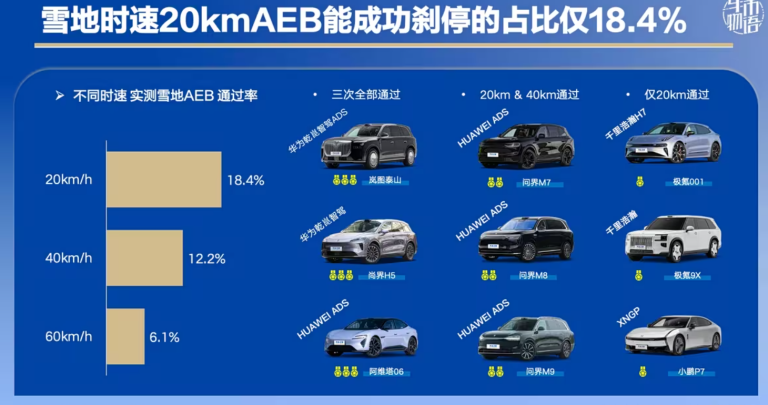
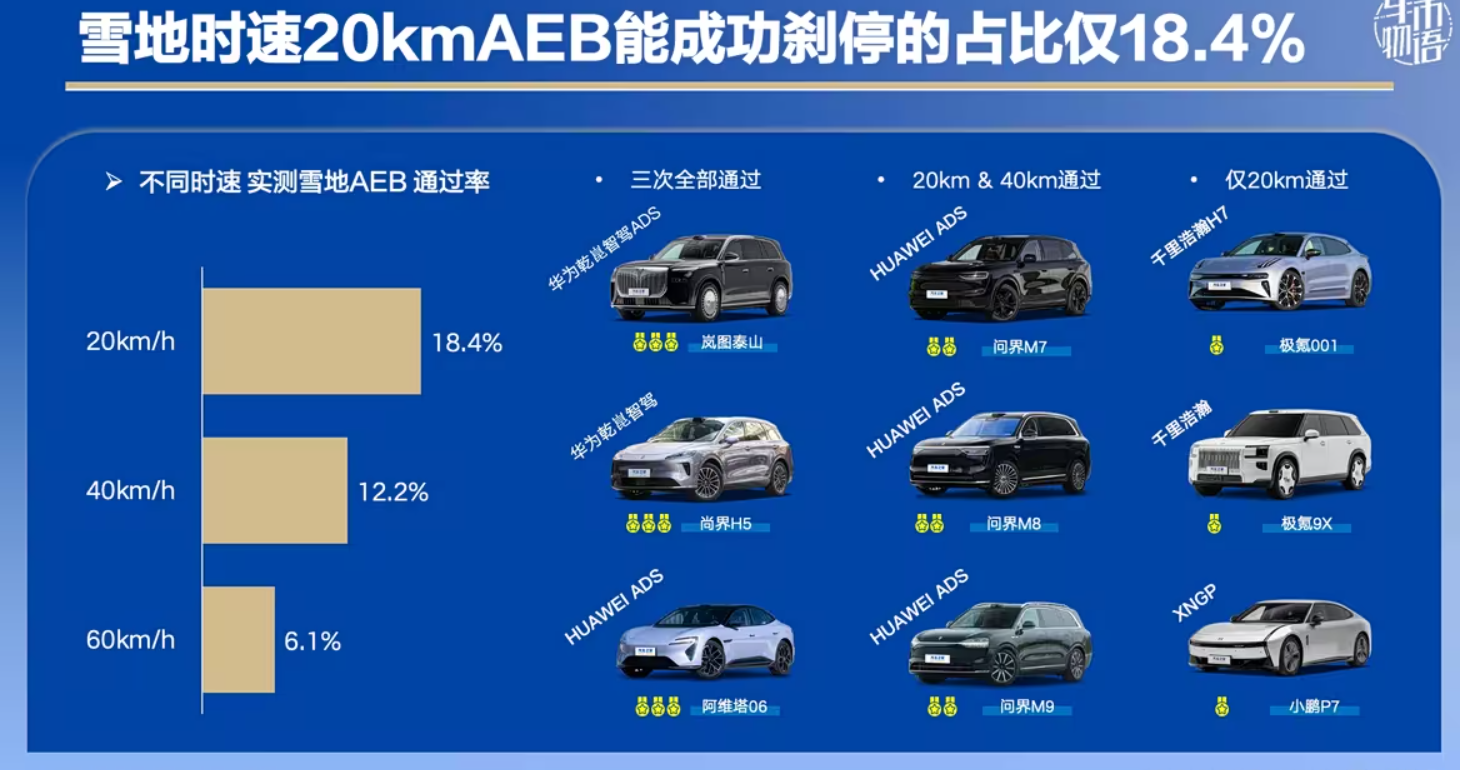
- Low Success Rate: Only 18.4% of cars could successfully stop at 20km/h on snow.
- High-Speed Failure: At 60km/h, only 6.1% of vehicles avoided a collision.
- Huawei Advantage: Every vehicle that successfully avoided collisions at speeds of 40km/h and above was equipped with Huawei’s Intelligent Driving System, highlighting the superiority of advanced sensor fusion in extreme weather.
Winter Performance Summary Table
| Metric | Average Performance (-10°C to -25°C) |
| EV Range Fulfillment | 42% (Avg. 257km) |
| EREV/PHEV Fulfillment | 53% |
| LFP Battery Performance | Competitive with NCM (42% vs 41.6%) |
| Cabin Heating (15 min) | Only 18% reached 18°C+ |
| AEB Success (60km/h Snow) | 6.1% (Success mostly on Huawei-powered tech) |
Final Thoughts for Buyers
NEVs are evolving rapidly. While reliability and range are no longer deal-breakers for winter driving, cabin heating efficiency and active safety on ice still have room for improvement. If you live in a high-latitude region, choosing a model with advanced thermal management and a proven ADAS system is crucial.
About the Author