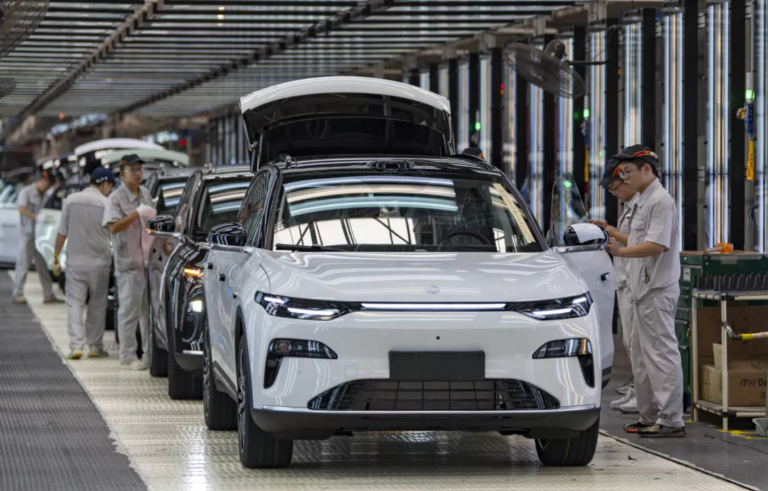
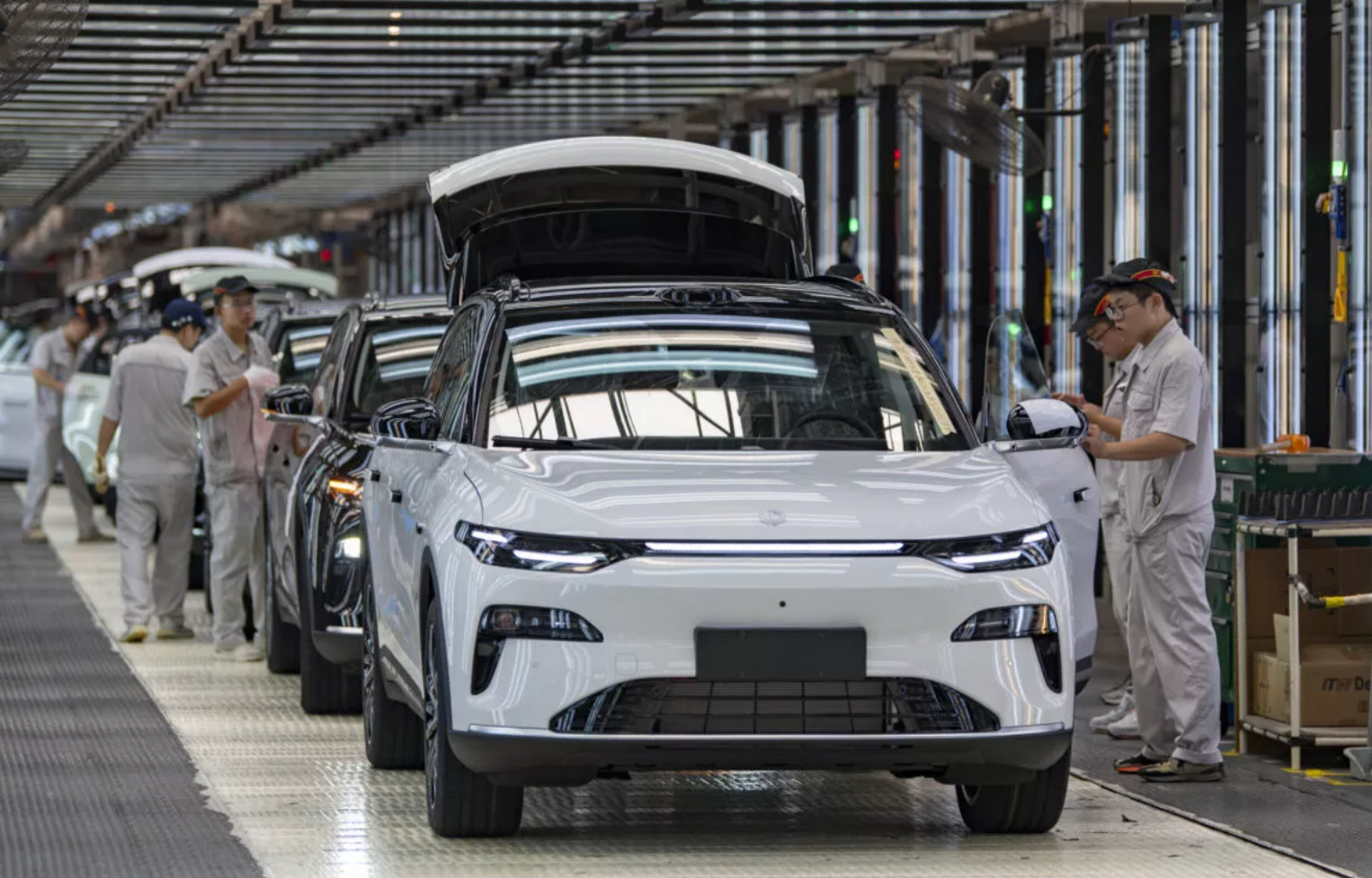
China’s new energy vehicle export surge reached new peaks in May 2026, as BYD shipped 160,644 units overseas (+80.7% YoY), Chery exported 181,871 units (+80.5%) and Geely surpassed 85,144 units (+183.7%). Combined, the three groups accounted for over 427,000 exported vehicles in a single month. With NEV export penetration in China first breaking the 50% line in early 2026 and global oil prices staying high, the China NEV exports May 2026 data underscores a structural shift: overseas markets are no longer a sideshow for Chinese automakers — they are the primary growth engine.
China NEV exports May 2026: three giants, three strategies
The three largest Chinese exporters are approaching the overseas market in distinct ways:
- BYD (160,644 units, +80.7% YoY): the most NEV-pure export story. BYD’s overseas volume is dominated by the Seagull, Song PLUS, Yuan series and SHARK pickup, with eight owned roll-on/roll-off vessels providing logistics independence. BYD is also building seven overseas factories with a combined capacity of about 1 million units annually by the end of 2026. Exports now make up roughly 42% of BYD’s monthly volume.
- Chery (181,871 units, +80.5% YoY): the largest Chinese auto exporter by unit volume. Chery’s export mix is broader, spanning ICE, PHEV and BEV across the Chery, Jetour, Omoda and Jaecoo brands. Key markets include Russia, the Middle East, Latin America and ASEAN, with CKD operations expanding in Europe. About 73% of Chery’s May volume was exported — the highest export ratio among major Chinese automakers.
- Geely (85,144 units, +183.7% YoY): the fastest export grower of the three. Geely’s Galaxy L-series, Lynk & Co and Zeekr are the primary export drivers, with Southeast Asia, the Middle East and Latin America as the initial beachheads. The 184% annual jump signals that Geely is still in the early innings of its overseas buildout.
Structural tailwinds behind the China NEV exports boom
Several macro and industry forces are supporting the China NEV exports May 2026 momentum:
- Elevated oil prices: Geopolitical tensions have pushed global crude above USD 85/bbl for most of 2026, making EV total-cost-of-ownership calculations more favourable in price-sensitive markets like Southeast Asia, Latin America and Africa.
- NEV export penetration above 50%: China’s NEV exports in the first four months of 2026 totalled 1.384 million units, up 120% year on year, with NEV share of total auto exports first crossing the 50% mark.
- Localisation push: Chinese automakers are moving from “selling products” to “building ecosystems” — localised production, supply-chain partnerships, after-sales networks and financing solutions in target markets.
- Diversified destinations: Q1 2026 data shows NEV exports flowing to over 10 major destination regions, including Europe, the Middle East, Southeast Asia, Oceania, Latin America and Africa, reducing concentration risk.
BYD‘s logistics moat: eight vessels, seven factories
Among the three, BYD has the deepest logistics and manufacturing moat for China NEV exports May 2026 and beyond. The company now operates eight owned RO-RO vessels with annual transport capacity exceeding 1 million units, insulating it from third-party shipping bottlenecks. On the production side, seven overseas factories (Hungary, Thailand, Brazil, Indonesia, Uzbekistan, Malaysia, Pakistan) are expected to bring combined annual capacity to about 1 million units by the end of 2026.
The SHARK pickup, a right-hand-drive BEV utility vehicle that cleared 4,000 units for the second straight month in May, is a strong indicator that BYD is targeting not just passenger-car markets but also commercial and fleet segments in Australia, Mexico and the Middle East.
Leapmotor and the new-energy export frontier
Leapmotor, backed by Stellantis, is emerging as the new-energy export leader in the new-force camp. The company exported over 20,000 units in May 2026 and has shipped 75,000+ units overseas in the first five months of the year, making it the top new-force exporter. The Stellantis partnership gives Leapmotor access to European dealer networks and local CKD production — a model that other new-force brands may try to replicate.
What the May data means for global buyers and investors
For overseas dealers, fleet operators and investors watching the China NEV exports May 2026 numbers, three conclusions stand out:
- Scale is here: Monthly NEV exports from China’s top three groups alone now exceed 420,000 units — roughly equivalent to Europe’s entire monthly BEV registrations. Chinese NEV exports are no longer a niche; they are a major global supply source.
- Logistics independence matters: BYD’s owned vessel fleet and factory network give it a structural advantage as other Chinese brands compete for the same third-party shipping slots and local production capacity.
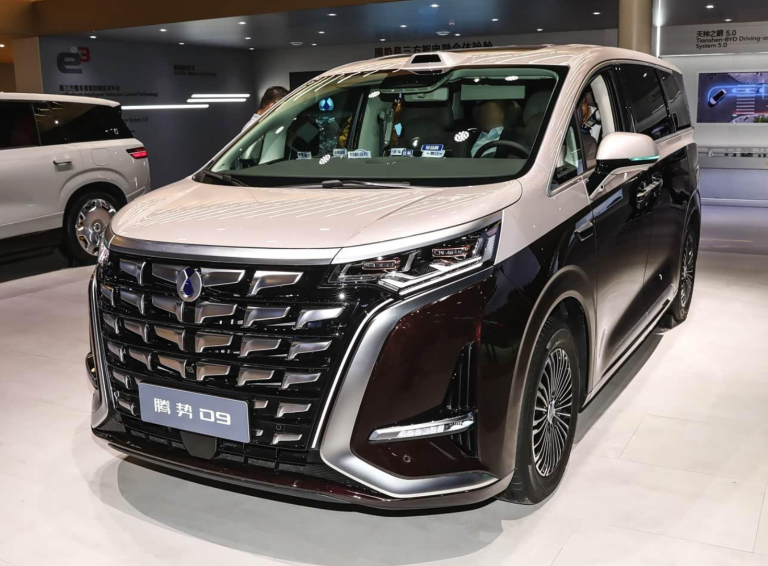
- The product mix is broadening: It is no longer just small city cars. Mid-size SUVs (Song PLUS, Galaxy L7), premium flagships (Zeekr 9X, Denza Z9 GT) and even pickups (SHARK) are all reaching global ports, expanding the addressable market well beyond budget-conscious early adopters.
FAQ
How many vehicles did China export in May 2026 from the top three groups?
BYD exported 160,644 units, Chery 181,871 and Geely 85,144 — a combined total of over 427,000 exported vehicles in May 2026.
How fast are China’s NEV exports growing in 2026?
China’s NEV exports in the first four months of 2026 totalled 1.384 million units, up 120% year on year, with NEV share of total auto exports first crossing the 50% mark.
What is BYD’s overseas manufacturing plan?
BYD is building seven overseas factories — in Hungary, Thailand, Brazil, Indonesia, Uzbekistan, Malaysia and Pakistan — with combined annual capacity of about 1 million units by end-2026, supported by eight owned RO-RO vessels.
Which Chinese new-energy brands are leading the export push?
BYD, Chery and Geely lead in unit volume, while Leapmotor is the top new-force NEV exporter with over 75,000 overseas units shipped through May 2026, backed by its Stellantis partnership.
Source: Autohome.com
Reviewed by Han Liu, Editor, iEVChina
About the Author