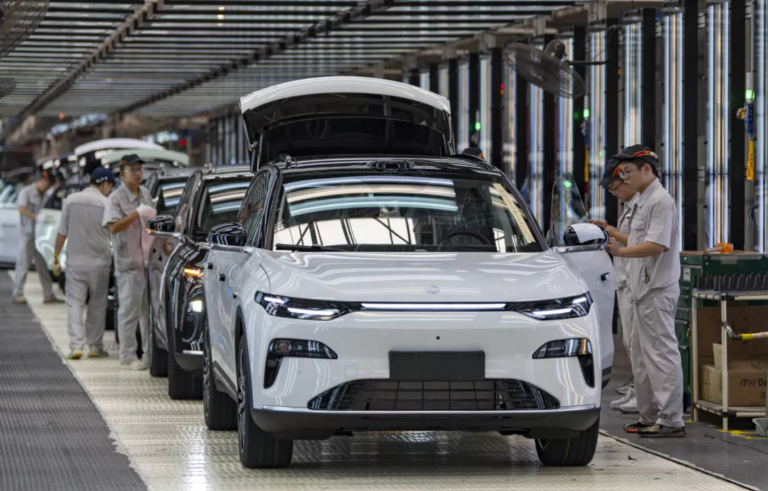
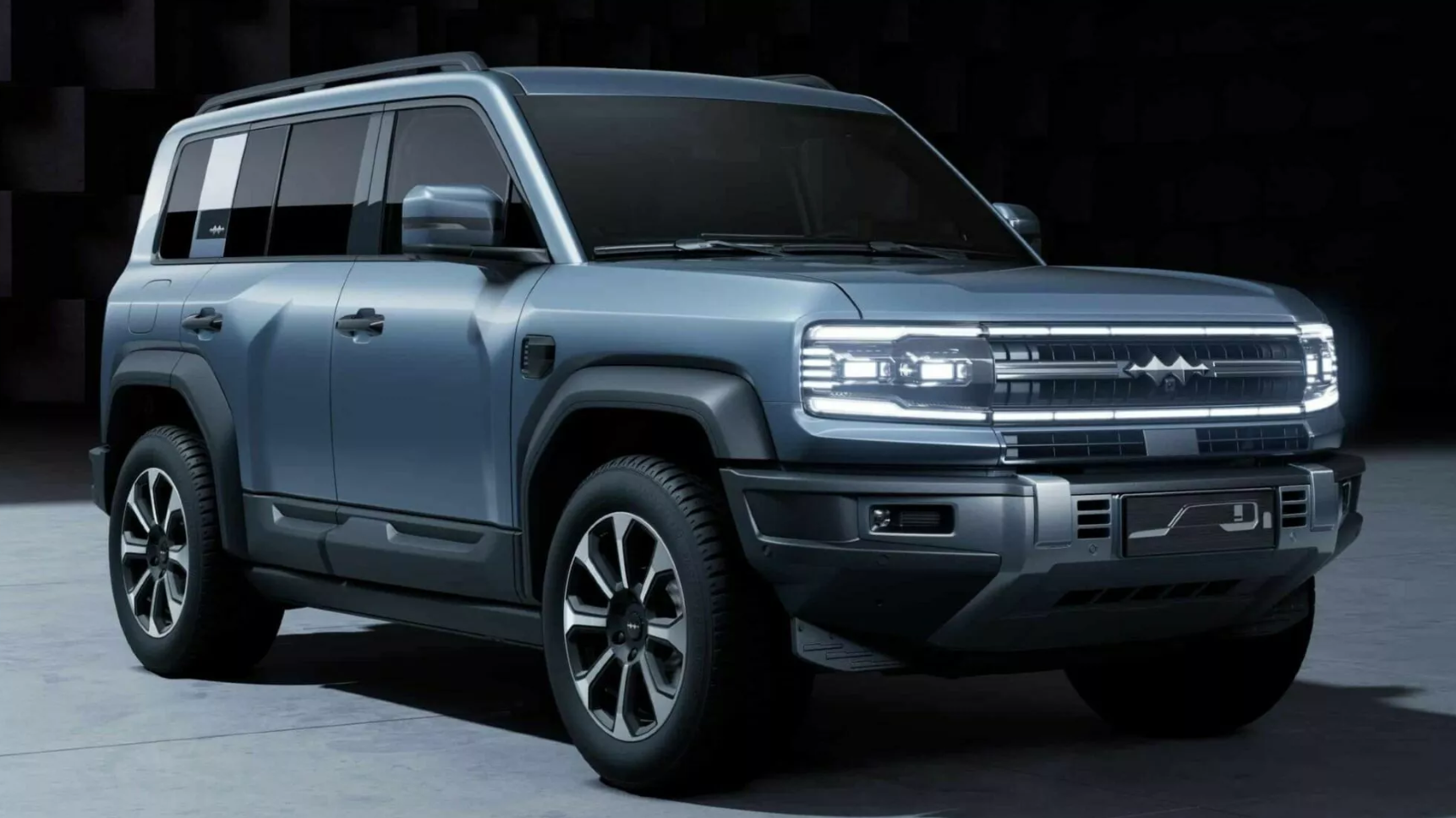
BYD’s off-road sub-brand Fang Cheng Bao (方程豹) delivered 30,186 vehicles in May 2026, up 139.7% year on year and 3.6% month on month. The Fang Cheng Bao May 2026 sales figure marks a fresh in-year high and lifts the brand’s cumulative deliveries past 420,000 units — making Fang Cheng Bao the second-fastest new-energy brand in China to reach the 400,000 mark, behind only Xiaomi EV. The Tai 7 PHEV SUV alone delivered around 17,017 units, while the new Tai 7 EV Flash-Charge edition’s ramp is still production-constrained.
Fang Cheng Bao May 2026 sales: 30,186 units, +139.7% YoY
Fang Cheng Bao now operates a four-model lineup — Tai 3, Tai 7, Bao 5 and Bao 8 — split between the lifestyle-leaning Tai sub-series and the harder off-road Bao sub-series. May volume distribution:
- Tai 7 (钛7): 18,000 units, of which 17,017 were PHEV and just over 1,000 were the newly launched EV Flash-Charge edition. The Tai 7 PHEV remains on track to extend its eight-consecutive-month run as China’s hybrid SUV and box-style SUV double champion.
- Tai 3 (钛3): 6,095 units, up 17.1% month on month, with the Flash-Charge variant accounting for 60% of the mix — a strong validation of demand for fast-charging hardware in the entry-level NEV SUV slot.
- Bao 5 and Bao 8: the remaining roughly 6,000 units, still waiting on the second-generation Blade Battery production ramp before Flash-Charge variants can lift volume further.
Inside BYD’s broader May 2026 sales of 383,453 units, Fang Cheng Bao’s 30,186 was the headline growth catalyst for the group. The brand’s average selling price now sits around RMB 230,000 (about USD 31,700), giving it a higher revenue contribution than the unit share alone would imply.
Tai 7: the box-style SUV that is reshaping the segment
The Tai 7 has become the dominant product behind Fang Cheng Bao May 2026 sales. Since its launch, the PHEV version has held a top position in two segments simultaneously: hybrid SUVs and box-style SUVs (方盒子). Its 17,017-unit PHEV print in May, combined with the early ramp of the EV Flash-Charge edition, points to a sustained monthly base above 20,000 units once production normalises.
What makes the Tai 7 particularly interesting from a global readers’ perspective is its mix of styling (a clear off-road box silhouette in the Suzuki Jimny family resemblance category) with a fully modern BYD DM-i PHEV powertrain and rapidly improving fast-charging tech in the EV trim. There is no direct international competitor at the moment in the RMB 200,000-300,000 (USD 27,600-41,400) range.
Tai 3: Flash-Charge variants are 60% of the mix
The Tai 3, Fang Cheng Bao’s entry-level lifestyle SUV, delivered 6,095 units in May, up 17.1% month on month. The standout detail is that 60% of buyers chose the Flash-Charge variant — a strong signal that fast-charging tech is becoming the table-stakes feature for entry-level NEV SUV buyers in China.
For competitors, that 60% take-rate is a warning shot: pricing alone is no longer the deciding factor in the sub-RMB 200,000 BEV SUV segment. Charging speed matters at every price point, and Fang Cheng Bao’s ability to deploy BYD’s second-generation Blade Battery and Flash-Charge platform across the lineup is a real competitive moat.
Bao 5 and Bao 8: production-constrained but key for 2H
Bao 5 and Bao 8 are the more traditional off-road members of the family — body-on-frame, four-wheel-drive PHEV SUVs sitting above the Tai sub-series. Both are currently production-constrained, with Flash-Charge variants of both models recently launched. BYD chairman Wang Chuanfu has said group-level production upgrades will be substantially complete by June, after which Bao 5 and Bao 8 volumes are expected to step up materially.
To soften the wait, Fang Cheng Bao is offering customers who locked Flash-Charge orders and have not received delivery within 30 days an extra day of free fast-charging rights for every day of delay — a customer-friendly move that also flags the brand’s confidence in clearing the backlog quickly.
What the May numbers mean for BYD’s premium strategy
Fang Cheng Bao is now BYD’s clearest premium-growth story. Together with the Denza brand’s 16,303 May units and Yangwang’s 286, the three premium sub-brands delivered roughly 46,775 units in May, around 12% of total BYD volume. That mix shift is exactly what BYD needs to defend group margins against ongoing price competition in the Dynasty and Ocean networks.
For 2H 2026, watch three triggers: the Tai 7 EV Flash-Charge production ramp, the Bao 5/Bao 8 production normalisation, and any new Bao or Tai model debuts. If all three play out, the Fang Cheng Bao May 2026 sales base of 30,186 units could become a 40,000-unit monthly run-rate by Q4.
FAQ
How many vehicles did Fang Cheng Bao sell in May 2026?
Fang Cheng Bao delivered 30,186 units in May 2026, up 139.7% year on year and 3.6% month on month — a new in-year high. Cumulative deliveries have now crossed 420,000.
How did the Fang Cheng Bao Tai 7 perform in May 2026?
The Tai 7 delivered around 18,000 units in May, with 17,017 PHEV and just over 1,000 EV Flash-Charge units. The PHEV remains the leading hybrid SUV and box-style SUV in China.
What share of Tai 3 buyers chose the Flash-Charge variant?
About 60% of Fang Cheng Bao Tai 3 buyers in May 2026 chose the Flash-Charge edition, signalling that fast-charging speed has become a key purchase driver in the entry-level NEV SUV segment.
When will the Bao 5 and Bao 8 ramp up?
BYD has indicated that group-level production upgrades will be substantially complete by June 2026, after which Bao 5 and Bao 8 — both now with Flash-Charge variants — are expected to step up in volume.
Source: Autohome.com
Reviewed by Han Liu, Editor, iEVChina
About the Author